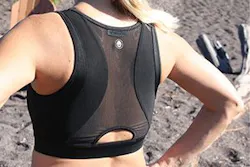
Project Profile: Where Are All the Women?

SEEHERWORK
Today, 400% more women are participating in the labor force than in the decade prior, according to the US Bureau of Labor Statistics. Plus, the ratio of women’s to men’s earnings by occupation within civil, commercial, and industrial careers is relatively even. However, women continue to represent a small fraction of the workforce. Why aren’t more women seeking careers in these industries?
Despite an unconscious bias individuals may hold regarding a woman’s ability to perform “like a man” on the job, the female body is equally capable of performing day-to-day work activities. Today’s Personal Protective Clothing (PPC) and Personal Protective Equipment (PPE), however, restrain women from performing at their best and put them at risk of falling, getting injured, or getting caught in machinery. A lack of fit compliance is creating safety and performance barriers that keep women from entering and staying in civil, commercial, and industrial careers.
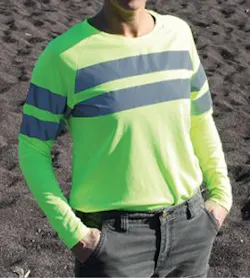
In 2014, the National Institute for Occupational Safety and Health (NIOSH) issued a report summarizing interviews with 475 tradeswomen. In it, women voice major safety concerns regarding the PPC and PPE provided to them on the job. Glove fit, for instance, was a major talking point for interviewees, mentioning, “You can be hurt…that glove could get wrapped up in a fan belt,” and “They gave me gloves so humongous, I couldn’t even pick anything up.”
SeeHerWork conducted over 50 focus group sessions for a 2018 study. The study found that tradeswomen sometimes have to be taped up with duct tape to keep extra material from flying around. It also found that women have had to toss protective gear aside in order to obtain the dexterity needed—which can expose them to potential hazards. Men run into similar issues, but not nearly to the same extent as women.
At the beginning of SeeHerWork’s study, interviewees were asked the open-ended question, “What do you think about personal protective clothing and equipment for women?” Responses reflected the women’s dissatisfaction with current PPC and PPE options. “We are tired of pink-it and shrink-it.” “We want to perform…we put our lives in jeopardy daily. It’s no wonder that there are not more women in the industry.”
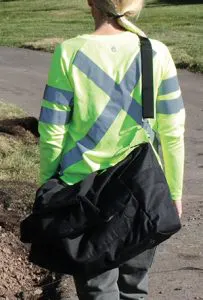
In response to being asked why they hadn’t complained in the past, many tradeswomen shared the sentiment of one interviewee who said, “I didn’t think we had any other options. Now that we know that we have options, we will raise our voices. It’s no longer about those that have been in the trades for 20-plus years and made it. We need to work together to help more women come in. I’ve been known to grab whatever and get them tailored, but not everyone can afford that. Especially the ones just getting started.”
“Pink-it and Shrink-it” is essentially the process of shrinking down men’s sized patterns and coloring them pink so they are suitable for women. This method comes with considerable safety risks. For instance, when safety toe boots are shrunk down, they are often too wide and put women at risk of compression and impact injuries due to the lack of full toe coverage. “Pink-it and Shrink-it” is also evident in workwear labeled for women that still has reversed button closure for men. In one popular work pant, women are unable to wear protective and reinforcing knee pads because the pants have been shrunk to the point where the pads are no longer insertable. SeeHerWork interviewed a product designer with over 16 years experience designing and manufacturing workwear who mentioned that even though similar issues were brought to her management’s attention back in 2015, the response was unhelpful. “Women are just not our core market. We don’t even know how we would get to them.”
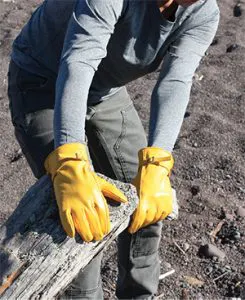
Gloves for small hands
While the Occupational Safety and Health Administration (OSHA) expects “the design of PPE and PPC for women to be based on female measurements,” there are no standard tests by the American National Standards Institute (ANSI), American Society for Testing and Materials (ASTM), or the European Committee for Standardization (CEN) to ensure fit compliance by the manufacturers. The responsibility to ensure fit lands squarely with the employer and most employers blindly trust catalogs and distributors that recommend small men’s sizes or “Pink-it and Shrink-it” options. SeeHerWork spoke with one category manager who said, “Wow, I just realized that we don’t have a sourcing issue. We have a process issue.”