 Ec Jk Blog
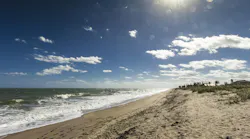
We’ve talked a lot in Erosion Control magazine about shoreline erosion, as well as the options those of us in coastal areas have to choose from as storms increase in intensity and frequency and as water levels rise. We can stay put and try to replenish our eroding beaches with sand; we can continue to armor the shoreline with sea walls and other structures, at least in places where it’s legal to do so; we can create some sort of living shoreline; or we can retreat.
When Hurricane Michael hit the Florida Panhandle two weeks ago, two homeowners were banking on a different sort of solution. Whether it’s an option that will work on a large scale remains to be seen, but for at least one house in the path of the storm, constructing to a new standard definitely paid off.
You might have seen photos of the house, which was left nearly intact as almost all the structures around it in Mexico Beach, FL, were flattened. The home’s owners, a 54-year-old radiologist, Dr. Lebron Lackey, and his uncle, Russell King, an attorney, planned for an event such as Michael when they built the house. Like many houses along the shore, it’s elevated to allow a large storm surge to pass harmlessly underneath. But the pilings holding up this house are buried 40 feet into the ground. The house itself is made from poured concrete, reinforced by steel cables and rebar. Even the small details—the screws holding the structure together—were specially chosen with the weather in mind. “I believe the planet’s getting warmer and the storms are getting stronger,” King notes in this article.
The features of the house are built to withstand fierce winds as well as floodwaters. The geometry and placement of the roof makes it less likely that wind can lift it off. The house did suffer some damage; the outside stairway and the walls that surround it were torn off, and the upper levels are now accessible only by ladder. However, because the stairs and surrounding walls were actually designed to break away, there was little damage to the remainder of the structure.
Florida has been strengthening its building code for homes built along the beach. The current code was put in place in 2002, although it applies mainly to new homes on the Atlantic coast. For those on the Panhandle, the standards are less stringent. Although about three-quarters of the homes in the worst-hit area of Mexico Beach were severely damaged or completely destroyed—only the slabs remain in many cases—older homes dating from the 1970s suffered the worst of the destruction.
The Lackey/King house is just a year old. “We wanted to build it for the big one,” says Lackey. “We just never knew we’d find the big one so fast.”
Western Water Summit Call for Speakers Is Open
The Western Water Summit will take place on January 22–23, 2019, in San Diego, CA. It focuses on all facets of water management: groundwater, surface water, wastewater, drinking water, irrigation, water law, reuse, generation, restoration, conservation and efficiency, and erosion and sedimentation. The Call for Speakers is open until November 1. Find more information about the conference tracks and registration at www.westernwatersummit.com.
About the Author
Janice Kaspersen
Janice Kaspersen is the former editor of Erosion Control and Stormwater magazines.
Related
 dreamstime_xxl_248222338
 Dreamstime L 74730980