New Case Study on Soil Health Practices Increasing Farm Profitability
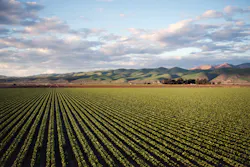
SACRAMENTO, CA – American Farmland Trust (AFT) has released a new case study on improving soil health at the Rogers Orchard in Madera, CA. This study is among four examples from Illinois, Ohio, and New York farmers, which add to four studies released in July 2019 that included the Okuye Farm in Merced.
The study is part of AFT's "Accelerating Soil Health Adoption by Quantifying Economic and Environmental Outcomes & Overcoming Barriers on Rented Lands" project. The growing library of case studies is designed to assist farmers curious about soil health and technical service providers who want to help farmers adopt soil health practices. This work continues to show that healthier soil on farmland brings economic benefits to farmers and environmental benefits to society. The case studies were developed in partnership with USDA’s Natural Resources Conservation Service (NRCS) under a Conservation Innovation Grant.
There is widespread recognition that adopting soil health practices such as cover crops, no-till and strip-tillage, nutrient management, mulching, and compost application are critical to improving farming’s environmental outcomes, improving air quality, strengthening water resilience, and lowering greenhouse gas emissions. Yet farmers often hesitate to adopt these methods, because they fear the financial risk of trying something new and the risk of investment on leased lands. They aren’t certain how much these investments will cost and can’t confirm the benefits.
NRCS State Conservationist Carlos Suarez says, “When it comes to conservation, producers have the know-how to make decisions based on what makes the most sense for their farm and ranch operations. The Conservation Innovation Grant improves our ability to recognize such case studies as the Rogers and Okuye Farms that provide valuable information on the economic benefits of using soil health management systems.”
Kara Heckert, AFT’s California Regional Director, says, “American Farmland Trust is making it easier for farmers to adopt these climate-smart agricultural methods by providing evidence for the economic benefits of these practices. We’re providing models for implementation to support widespread adoption and rapid realization of benefits for farmers and residents across the state. AFT is achieving this by finding ‘soil health successful farmers’ in California, such as the Rogers and Okuye Farms, and with their permission conducting a benefit-cost analysis of their soil health journey.”
The results have been impressive for the Rogers’ 175-acre almond orchard with sandy loam soil on flat terrain. By adopting nutrient management, cover crops, mulching, and compost applications, the farm reported improved soil tilth, better water infiltration, and water holding capacity along with an increase in beneficial insects leading to decreased costs for pesticides (72%), fertilizer (55%), and irrigation (25%).
Quantitative evidence shows soil health practices at Rogers Orchard achieved increased incomes an average of $991 per acre and by $173,345 for the whole farm, providing a 553% return on investment.
Almond grower, Tom Rogers says, “Our trees are more productive, the soil is healthier, and the orchard is providing environmental benefits like better local air and water quality and lower climate emissions. My philosophy is simple, take care of the soil and it will take care of the trees.”
Almond yields improved 10% on the Rogers orchard due to improved soil health. Greenhouse gas emissions were reduced by 29%, according to USDA's COMET-farm Tool.
These are comparable results to a case study released by AFT in July 2019 featuring Ralf Sauter of Okuye Farms in Merced, CA. That almond farm experienced a 20% yield improvement due to its soil health practices and improved its bottom line by $657 per acre and by $76,155 on all 116 orchard acres by adopting practices such as nutrient management, conservation cover, mulching, and compost application. This provided a 198% return on Sauter’s investment in these soil health practices.
AFT hopes conservation partners at NRCS, Resource Conservation Districts, and Extension, plus partners in the private sector (corporations with supply chain sustainability goals, ag retailers, crop consultants, etc.) use these case studies with their customers to help answer questions about the costs and benefits of adopting soil health practices.
AFT will be hosting online webinars to offer training to fellow conservationists and farmers who want to learn how to conduct the partial budget economic analysis used in this project. Please email [email protected] with your interest in the training webinars.
Source: American Farmland Trust