Nutrient Runoff Threatens Coral
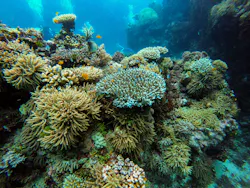
The existence of coral reefs, in all their abundant biodiversity and beauty, relies largely on a complex symbiosis between reef-building corals and microalgae. This finely tuned, fragile partnership is constantly under threat from environmental stress—most notably the twin effects of warming waters and ocean acidification caused by climate change. But scientists say a third driver, that of ocean deoxygenation, could pose a greater and more immediate threat to coral reef survival.
A perspective paper published in Nature Climate Change brings together existing biological, ecological, and geochemical evidence to consider the broader role of ocean deoxygenation in global coral reef degradation. The University of Technology Sydney (UTS) led study has found that the threat of ocean deoxygenation to coral reefs has largely been ignored and remains unaccounted-for in predictions about future reef health. This is despite reef-building corals underpinning both the ecological and economic value of the world's coral reef ecosystems.
Lead author, Dr. David Hughes, a Research Associate at the UTS Climate Change Cluster, said that measurements taken over the last 50 years showed oxygen levels in the world's oceans have already declined by around 2% "largely due to the dual forces of global climate change and coastal pollution caused by nutrient runoff."
"Our oceans are slowly suffocating and although we have some understanding about deoxygenation in the open ocean, this process has been largely overlooked in coastal tropical reef systems. Although oxygen is a relatively easy environmental variable to measure, there is surprisingly very little data available for coral reefs," he said.
The authors, who also include scientists from the University of Copenhagen, Denmark, and University of Konstanz, Germany, say this lack of data makes it very difficult to assess what normal oxygen levels are on coral reefs or the dissolved oxygen threshold at which areas might become "dead zones."
"Identifying thresholds of low oxygen tolerance and how they vary across coral reef-associated species and environmental history is arguably the key step in understanding how reef communities will respond to continued ocean deoxygenation," Associate Professor David Suggett said.
The authors say that unlike the deep knowledge gained over the past 30 years around the twin impacts of temperature and pH levels, there wasn't the same depth of knowledge about ocean deoxygenation and, therefore, how this will shape reef ecologies.
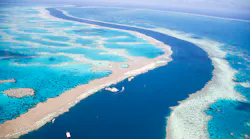
Suggett and Hughes say the establishment of an oxygen sensor network on the Great Barrier Reef would be a good place to start and could help develop an oxygen inventory of the reef to enable new approaches and management practices.
A positive outcome from the study is the sign that local management is crucial to preventing further deoxygenation in coastal waters.
"The resources being mobilized to improve agricultural and catchment management on the Great Barrier Reef are good examples of practices to ensure the oxygen stocks of coastal reefs," Associate Professor Suggett said.
"Everyone has a role to play to ensure our reefs don't suffocate further," he said.