
This fall, in the middle of the global COVID-19 pandemic that has disrupted business, education, and countless projects, the University of Minnesota’s Erosion and Stormwater Management Program marked its eighteenth year offering one- and two-day certification and informational courses and training in erosion control and stormwater management topics. Despite a small staff, the Program shows no signs of slowing. One reason is that the nearly two-decade-old program saw its birth when two state agencies recognized a need for external training.
In the Beginning
“The Minnesota Pollution Control Agency and the Minnesota Department of Transportation wanted a third party, the University of Minnesota, to provide training for both of their entities—both the regulators and the regulated—on the compliance for NPDES,” says John Chapman, assistant professor and program director with the Program. The MPCA and DOT agreed to support the Program once the university became involved.
Chapman clarifies that the agencies’ support wasn’t financial. “It was just an agreement to support it with potential speakers, facilities where they were available, that sort of thing,” he explains. “And at the time, the Minnesota Department of Transportation actually did one better.” When the first classes were offered in 2002, he says, the DOT had a few speakers do some teaching with the classes. At that point, the Program had no full-time employees, just a post-doctoral student at the university helping with scheduling. “Because of the support that the DOT put into [the Program], it got a start,” says Chapman.
“The idea was to have the university build up the revenue to be able to hire someone,” says Chapman. “You need a pot of money if you’re going to hire someone, to guarantee that you can pay the salary for that person.”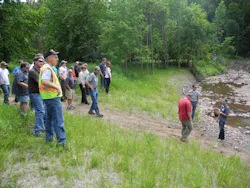
In 2003, the agencies officially signed off on formal support of the Program, agreeing that the program was needed. Over the years, Chapman says that written documentation has been very helpful in introducing the program to new management at the DOT and MPCA. “We let them know that we’re there and have been doing this for years,” he says. “It’s working great, so don’t change it.”
It’s not just partnerships with MPCA and DOT that have supported the Program, though. The city of Alexandria, MN, is an MS4 community that was struggling with training, Chapman explains. “They reached out to us and said, ‘Can you help us out? Could you come up here and do some training? We’ll round up the people and you can use our facility.’” To Chapman, stories like this are proof of the program’s success. “We don’t have to market. We don’t have to seek these things out. The local people want and need this training,” he says. “If we can work out the budgets to make it work for them, we can reach 50 more people. That’s where the real success of the program is—in all those different partnerships we’ve had.”
Assembling the Team
Chapman has been with the program almost since the beginning.
“I was hired in 2004,” he says. “The first classes were offered in the fall of 2002 and the spring of 2003. I came on a year after it started.” Chapman is a civil engineer who worked in consulting before joining the Program when the university was looking for a program director.
It was only a few years later that Rebecca Forman, now adjunct professor and education specialist, crossed paths with Chapman. “I went into consulting right after graduate school,” says Forman. “I did a ton of different work in consulting on all sorts of different types of projects and sectors. I took one of [the Program’s] classes because I was doing construction stormwater.” Forman is a limnologist; she studies inland aquatic ecosystems.
“I went to John after one of the classes and told him that a woman next to me had said, ‘I don’t get what the point is of getting dirt in water. Why is it a problem?’ She was an engineer and was looking at the problem structurally. I was looking at it from an aquatic perspective,” Forman recalls. “I went and talked to John and said, ‘I think it would be really cool if you had a module in there about why this is a problem. What are the environmental impacts of dirt in water?’ He said, ‘It’s a great idea. Why don’t you do it?’” She and Chapman both chuckle.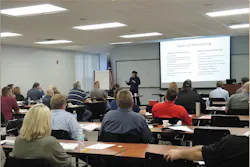
“I started teaching a unit or a lecture in one class; that was the fall of 2006. Over time, it just became doing more, and more, and more. I hired on full time in the spring of 2017,” says Forman. Before that, she was working with the Program as a contract employee.
Finding Strength in the Challenges
One of the key successes—and struggles—of the program that both Chapman and Forman can agree on is staffing.
“I believe any training program is only as good as the instructors,” says Chapman. But with only Chapman and Forman as full-time instructors, maintaining a strong pool can be challenging. “Instructors come and go,” he explains. “They need to be developed and that is a huge challenge to make sure that we have good instructors, that they’re knowledgeable and experienced.”
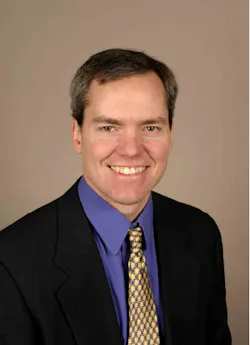
There is a silver lining to having so many working professionals as part-time instructors, though—they are involved in the industry and in touch with the latest challenges, solutions, and trends.
“I think that is one of our biggest strengths because we have people who are actively doing things,” Forman points out. “They’re writing stormwater plans. They are inspecting the sites. They’re out on bridge and road projects, so they know. They also often see these attendees out in the field, which gives another layer of credibility—they’re up on what’s going on.”
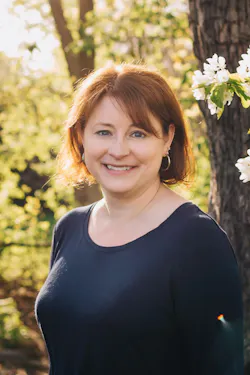
Forman had been working as a consultant contract employee for over a decade before becoming a full-time instructor. “The program kept growing and my contract was getting bigger,” she explains.
“As we grow and we add more classes and get more revenue, I can justify to the University that we can now support another person,” says Chapman. “That allowed me to bring someone in full time.”
Something for Everyone
Chapman says the Program now offers 100 classes a year—around 40 different courses with numerous sections of the same course—with him and Forman as full-time instructors and a dozen or so part-time speakers. “The classes mainly fall when the contractors want to be training, which is the winter months—the academic year, essentially,” he says. “Through the summer or during slow periods or even during the fall semester when construction is wrapping up, there’s no way people are going for training. It’s a six-month time period that I need people, so full-time employees are a little tricky if we have 20 of them to provide training [during the slow period].”
The background of their students is varied, Forman says, although “there’s definitely a trend that there are a lot of contractors—people who are putting BMPs in the ground will be there. We have a lot of civil engineers and scientists who are going to be designing plans. We have people who are regulators that come to classes.”
Some students are completely outside the construction industry, she says. “We have people who run industrial facilities. They run food manufacturers or wood manufacturers, and they come for the industrial stormwater classes. And we do have some classes that we offer to students at the university; they’re able to take the class as well.” Chapman adds there are also attendees from the government.
Developing a Comprehensive Curriculum
It took time to build this breadth and depth of course offerings. “In the first year, just two classes initially were for the construction managers and construction installers,” says Chapman. “Soon after that first season, they addressed the need for a design element. Those were the first three core construction-related NPDES topic courses.”
The Program was offering a certification, he says, which needs to be refreshed every three years. “Three years after that, we [added] an additional three courses for the recertifications.”
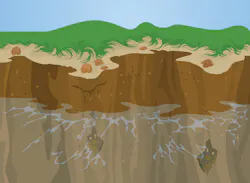
Forman points out that one of the good things about coming back every three years is that regulations and products change. “I learn a lot from the attendees as well,” she says. They share their knowledge and new ways they’ve used products with the class, she says, especially in some of the more advanced classes.
“We try to run more of a facilitated class than a ‘lecture-at-you’ type class because there’s so much great talent that comes into the classes,” adds Chapman. “We really try to tap into that with a lot of peer-to-peer interaction when we can.”
Staying Sharp
The collaborative, back-and-forth of the program is important to Chapman and Forman, especially since they both left consulting careers to work on the program full-time. “The longer we’re out of consulting, the rustier some of our experiences become,” says Chapman, but he’s committed to keeping Forman and himself sharp. “I really feel like having research done as part of the program is important,” he says. “Over the last several years, we’ve had a handful of research projects we’ve done. I’m trying to expand the funding for more research so Rebecca and I can continue to stay relevant, even though we’re full-time in academic roles. That’s really important and one direction we can continue to expand.”
Funding for past research projects has come from the DOT “when they have technical questions on best management practices,” he says, and from the state as well. “In Minnesota, there’s a tax that residents actually asked for—they asked to be taxed to have money to protect water. That fund generates some money that is dedicated for research and I received a piece of that.” They have also done some modeling on the different pollutants in the sediment that build up in manhole structures. With more research funding, Chapman says, “we’d be able to do more and answer more questions for our students.”
“Research is key,” Forman agrees.
Going Online in the Pandemic
When I first spoke to Chapman and Forman earlier this year, it was before the COVID-19 pandemic began. Shortly after our conversation, countries around the world went into lockdown; in-person events, meetings, and classes were canceled. As we’ve begun settling into our new, modified routines, I reached back out to Forman to see how the Program has adjusted and what new challenges lie ahead.
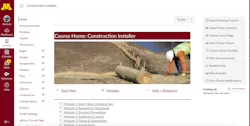
When states around the country, including Minnesota, began shutting down non-essential businesses in mid-March, Forman’s interest in online classes suddenly became more urgent. Within a week, she says, all the Program’s construction certifications and recertifications were moved online and within about three weeks, the industrial stormwater classes followed.
During our first conversation, Chapman and Forman said the Program was averaging about 3,000 students per year. Over the last 18 years, Chapman says the program has served over 39,000 from 38 states and four countries. “I’m keeping track on the map. We’re hoping to get to 50 states,” he adds.
“Someone from Alaska,” Forman laughs. “We need an Alaskan to come.”
I spoke with Mary Dieltz, who is the program administrator, to see if there had been any noticeable change in the number of students since the pandemic started, but she believes there are more attendees than before.
Moving the Program’s courses online has not only made more classes accessible to attendees around the country, but Forman says many clients have said the online programs are the best they’ve taken. The online classes are designed so attendees don’t need to complete the program in one sitting; they can start the program, pause it, and come back. Some attendees have told Forman they have re-watched portions of the class to answer their own questions, while others have reached out to her and begun more in-depth discussions outside of the class.
“Some people think about online classes as sitting in front of a screen and not doing anything. But with the interaction we have, we’ve received a lot of thoughtful participation from attendees,” she says. She credits the attendees with a good deal of the success of the online programs. “We stepped up and got the classes there,” she explains, “but the attendees have really done a phenomenal job.”
Overcoming Challenges and Looking to the Future
The speed with which the Program turned around to an all-online model is impressive, but there have been some hiccups. For starters, where some administrators used to register groups of attendees for certifications, now all registration needs to be done online, one person at a time, through the university. Forman has been doing a lot of registrations herself to help bridge that gap. Dieltz says that for the Program, it’s good customer service to help with registrations.
Now that the uncertainty of the early days of the COVID-19 pandemic have passed, we’re all grappling with what happens next—we’re certainly not back to “normal,” but we can begin imagining what our post-pandemic lives might look like. What tools, processes, and modifications enacted during the pandemic might stick around for the long term?
While Forman and Chapman are gratified that their transition to online programming was successful and intend to keep a broad offering of online certifications available, they look forward to a time when in-person classes can resume. “Our hope is always that we’ll be able to continue traveling to offer in-person programs,” says Forman. “In-person classes offer a different training experience, one that many of our students really like.”
Even though they’ve received plenty of positive feedback on the online classes, Forman admits that “people who are out in the field all the time aren’t used to sitting in front of the computer,” she says. “We’ll always offer training throughout Minnesota, but we’ll continue to offer online courses to people for whom in-person classes aren’t convenient. And of course, we’ll continue to refine the courses and add new ones when we can.”
Committed to Success
Having been with the Program for most of its 18 years, Chapman and Forman are dedicated to making it the best it can be, whether by conducting research, adding new classes, or fostering peer-to-peer interaction in each course.
“I love that I do different things every day. I don’t like to sit and do the same thing,” says Forman. “I teach, I can go to conferences, I can do online programs, I can help with administrative tasks. I like the variety.”
Chapman echoes Forman’s appreciation. “It’s probably thanks to Rebecca and I both coming out of consulting. It’s nice to have the freedom to say this looks like an interesting path that we think we need to pursue,” he says. “As long as we can fund it—or find some way to move it forward—there are no real barriers to that. We don’t have a client that needs to ask for it. To have the freedom to pursue these different things that we think are important is a great experience.”
Forman adds that the attendees’ appreciation is exceptionally gratifying. “I never knew that thanking an instructor would make their day,” she laughs. “I’ve come into John’s office more times than he can count and said, ‘I had the best class.’ That makes me feel like I’m doing something good with my job and my life.”
Chapman and Forman’s commitment to the quality, value, and importance of the Program is clear, even after whirlwind adjustments that were implemented in response to the COVID-19 pandemic. It’s the kind of dedication that will, hopefully, carry the Program for years to come.
About the Author
Rachel Sim
Editor
As the editor of Stormwater magazine from June 2019 to December 2020, Rachel Sim created and curated quality content addressing the challenges faced by surface water and erosion control professionals, focusing on cutting-edge technology and the latest environmental research.