Success South of the Border
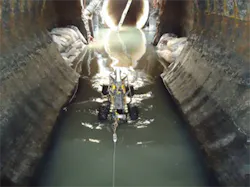
R.S. Technical Services (RST) equipment figured heavily in the first successful trenchless installation in Mexico, which occurred in late 2014. Cured-in-place-pipe (CIPP) was chosen to rehabilitate 2,625 ft of five residential and industrial gravity sewer lines. The 60-in.-diameter concrete pipes ran beneath a main artery in the busy Colonia Roma district of downtown Mexico City.
Advanced age, constant heavy traffic loading, sewer gas corrosion and a substantial 1985 earthquake had shifted, cracked and even fully separated large sections of these sanitary collection lines.
Following cleaning, the pipe required video inspection in three separate passes:
• before liner sleeve introduction, to ensure all debris and blockages had been removed, as well as to identify service connections and assess pipe conditions;
• during the CIPP process, to monitor proper sleeve installation and curing; and
• after the last pipe repair, to provide proof of effective rehabilitation without defects.
The rough pipe condition—including many broken, jagged areas that could hang up or even sever most manufacturers’ control cables—posed a real obstacle to successful CCTV inspection.
“We selected RST as a supplier because we require innovative systems that guarantee high performance inside rugged industrial sanitation environments,” said Angel Amaya of INBODE. “Their steel-armored single-conductor cable makes RST products ideal to meet the rigors of this operation,” including quick, easy re-termination in the field if necessary, ensuring minimal downtime.
INBODE chose an RST vehicle-mounted system, running a TrakSTAR pan-and-tilt zoom camera on a steerable storm drain tractor that is capable of televising pipes up to 200 in. in diameter. Pipeline Observation System Management software processed imagery and allowed editing of video and photographic reports to coincide with National Assn. of Sewer Service Companies standard identification and failure classification data.
The equipment performed flawlessly, completing the full inspection cycle in just 72 hours, allowing the CIPP process to move forward quickly.