Rain Brings Lake Michigan Sewage Dump
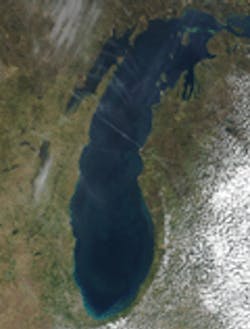
This past Sunday, heavy rain prompted the Milwaukee Metropolitan Sewerage District to dump a large but unspecified volume of raw sewage into local streams and Lake Michigan, district officials announced Monday.
According to a report in the Milwaukee Journal Sentinel, the intensity of the storm suggests that the volume dumped "is going to be a big number," said John Cheslik, project manager for the private firm that operates MMSD's two treatment plants and the deep tunnel system. Up to 4 in. of rain fell on the metropolitan Milwaukee area.
The district began dumping sewage at 9:45 p.m. Sunday, and the overflows continued until about 10:30 a.m. Monday - nearly 13 hours. MMSD spokesman Bill Graffin said the district would provide a dumping volume figure in a few days.
He said untreated sewage was dumped from multiple points along three rivers in Milwaukee that drain into Lake Michigan - the Milwaukee, the Kinnickinnic and the Menomonee.
It was the first sewage dumping this year by MMSD. After a wave of heavy rains in May 2004, the district initially said it had dumped a record 4.6 billion gallons. After changing its method of calculating overflows, MMSD later revised the figure to 1.7 billion gallons.
MMSD has been cited by the state Department of Natural Resources for some of that dumping.
Under terms of the district's operating permit, dumping from combined sewers that carry both storm water and sanitary waste is permitted up to six times a year. Graffin confirmed that sewage was dumped Sunday from combined sewers, which serve older portions of Milwaukee and part of Shorewood. He was uncertain whether more concentrated sewage from sanitary sewers was also dumped, which would likely violate state rules.
The district has not found any evidence of major equipment malfunction or human error involved in the latest dumping, Graffin and Cheslik said.
"We had a lot of rain in a very short period of time," generating more sewage than the MMSD system could process, Graffin said.
"Things worked as they should have worked," Cheslik said. Building a sewer system that could handle any rainstorm would carry a huge price tag, he said.
Source: Milwaukee Journal Sentinel