New Jersey Forest, Farmland to be Preserved Under EPA Settlement With Home Builder
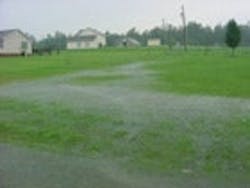
The U.S. Environmental Protection Agency has reached an agreement with the homebuilder D.R. Horton LLC for violations of federal regulations that protect against pollution from storm water runoff. Under the agreement, D.R. Horton will pay a $99,000 penalty. The company will also pay $104,420 to The Land Conservancy of New Jersey to partially fund a 212-acre land acquisition and preservation project in Mount Olive, N.J. The land is undeveloped forest and farmland near the Raritan River that provides more than 1 million New Jersey residents with clean drinking water.
The land acquisition and preservation project contained in the settlement with D.R. Horton is an environmentally beneficial project that a violator voluntarily agrees to undertake in partial settlement of violations. It must be a project that a violator would not otherwise be required to perform.
“Clean water is a vital natural resource and it is crucial that we reduce the pollution reaching our lakes, rivers and streams to protect people’s health,” said EPA Regional Administrator Judith A. Enck. “Soil and pollutants carried by uncontrolled storm water runoff can seriously damage our waterways. The settlement with D.R. Horton will reduce storm water runoff and ensure that farm and forest will be preserved for future generations.”
Under the federal Clean Water Act, developers of sites one acre or larger are required to implement storm water pollution prevention plans to keep soil and contaminants from running off into nearby waterways. The rate at which water carries soil and contaminants off of construction sites is typically 10 to 20 times greater than that from agricultural lands, and 1,000 to 2,000 times greater than those of forested lands.
EPA inspected D.R. Horton’s Grande at the Hanover construction site in Whippany, N.J., in October 2009 and discovered that the company had lacked the necessary storm water discharge permits for the site since 2005. Storm water ran off of the Hanover site and into the Whippany River, possibly polluting the river. EPA also inspected D.R. Horton’s Grande at the Springville construction site in Mount Laurel, N.J., in October 2009 and found that the company had failed to obtain a permit for the site, perform required inspections of the site for eight months and submit environmental compliance reports and certifications from 2005 to 2008. As a result of EPA’s inspections, the company improved its management of storm water at the Hanover site, and both sites were brought into compliance with storm water management regulations.
Establishing and adhering to storm water pollution prevention plans at construction sites is required by the federal Clean Water Act. Routine inspections ensure that companies are properly managing storm water runoff and fully implementing their storm water pollution prevention plans.
Source: EPA