Federal, State and Local Partners Complete Ottawa River Cleanup
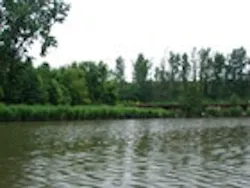
The U.S. Environmental Protection Agency (EPA), the state of Ohio and the Ottawa River Group announced that they completed a major cleanup project on the Ottawa River. The project involved dredging 242,000 cu yd of contaminated sediment from a 5.5-mile section of the Ottawa River in Toledo, Ohio.
EPA provided $23.5 million for the project through the Great Lakes Legacy Act, a federal program targeted at cleaning up contaminated sediment in Great Lakes Areas of Concern. The Ottawa River Group also provided $23.5 million and the city of Toledo provided space in its municipal landfill as its cost share.
“This cleanup brings us closer to the day when it is safe to swim in the Ottawa River and all its fish are safe to eat,” said Cameron Davis, senior adviser to EPA Administrator Lisa P. Jackson. “Previous Great Lakes Legacy Act cleanups have improved local economies as well as the environment and this is an important step forward for the region in efforts to restore the Great Lakes.”
As a result of the cleanup, more than 7,500 lb of PCBs, 80,000 lb of polycyclic aromatic hydrocarbons called PAHs and more than 1 million lb of heavy metals were removed from the river. This sediment contamination was a key contributor to the "do not eat" fish advisory and the "no contact" water advisory that are currently in place.
“This project is an important step in providing the people of Ohio healthy fish to catch, a clean environment to hunt in and improved bird watching experiences,” said Charlie Wooley, deputy regional director, U.S. Fish and Wildlife Service, Midwest Region.
“The Ottawa River contamination was a side effect of the region's great industrial legacy. Today, we are creating a new legacy for future generations–a clean river that has potential to be a real showcase and a great example of what can be accomplished when government and private business work as partners," said Chris Korleski, director of Ohio EPA.
Dredging activities in the Ottawa River began May 1. The sediment was removed using hydraulic cutterhead dredges—large suction systems that pulled in the sediment and river water and pumped them to the Hoffman Road Landfill, where they were processed and disposed of. The water was collected and treated to meet discharge standards before it was returned to the river. About 15,700 cu yd of sediment with the highest concentrations of PCBs were treated separately and sent to a landfill in Michigan that is licensed to accept this type of waste.
The completion of this project marks further progress in the cleanup of the Maumee River Area of Concern, a key priority under the Great Lakes Restoration Initiative.
Source: U.S. EPA