California Storm Water and Wastewater Conference Looks at Long-Term Clean Water Goals
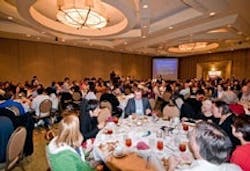
In early March, 300 wastewater and storm water professionals gathered in Long Beach, Calif., for the California Water Environment Assn.’s (CWEA) 37th annual pretreatment, pollution prevention and storm water conference, known as P3S.
State and federal regulators provided updates on programs and goals, while California professionals offered updates on their finished and upcoming projects. There were nearly 70 presentations total, including several on the hot topics of MS4 permits, water reuse and chemicals of emerging concern.
Opening Session. James Hanlon, director of the Office of Wastewater Management for the U.S. Environmental Protection Agency (EPA), made the first public announcement of an April 15, 2010, clean water summit featuring EPA Administrator Lisa Jackson. In regard to storm water, Hanlon noted that the EPA is encouraging a longer-term outlook--not just three to four years, but looking at the 40-year horizon, which will bring a 45% increase in population. He also addressed a storm water analysis report from the National Academy of Sciences that encourages the EPA to look not at individual pipes and pollutants but at larger watersheds. If communities can manage the flow, they can manage the pollutants, Hanlon said. Hanlon also outlined big-picture goals for the EPA, including monitoring nutrient loading. In closing, Hanlon acknowledged the series of articles by The New York Times and others about America’s ability to meet clean water goals. The EPA has taken steps to put together action plans to address many of the concerns raised in the articles and is looking to “level the enforcement playing field,” he said.
Federal regulators' updates session. Eugene Bromley from EPA’s Region 9 Office outlined five principles the office is considering to achieve storm water goals. This includes expanding MS4 areas; considering strategies for less stringent requirements in areas where communities want more development to occur; expanding green infrastructure and encouraging the use of systems which mimic nature; making Phase I and II regulations more consistent; and looking at encouraging the retrofit of more storm water controls into existing neighborhoods and businesses.
Water reuse session. Elsa Lopez of the Water Replenishment District (WRD) of Southern California outlined the agency’s efforts to protect and refill the aquifer underneath Los Angeles. Lopez outlined her agency’s long-term project, dubbed W.I.N. – Water Independence Now. California’s drought and an increasing need for energy efficiency is causing water agencies such as WRD to use more locally sourced water, including capturing storm water and allowing it to percolate into the aquifer. Doug Walters of the city of Los Angeles discussed a successful test program of distributing rain barrels to residents. The barrels are used to capture rainwater that is then reused in the garden during dry periods.
The conference also included a range of full-day training sessions for pretreatment inspectors, storm water designers and a class on the maintenance, operation and inspection of fats, oils and grease-control devices. Certification hours were overseen by CWEA volunteers.
In a nod to the need for more green jobs, the P3S Committee developed a special morning session just for small and medium-sized environmental companies in Los Angeles, including consultants, architects and contractors. Nearly 100 people attended the meet and greet event. Chairman Michael Simpson of the City of Los Angeles hosted the session along with representatives from the EPA, California’s High Speed Rail Authority, the Metropolitan Water District, the Community College District and others. Each agency provided information on upcoming projects, funding and their small business outreach efforts.
The conference was sponsored in part by TetraTech, Malcolm Pirnie, Larry Walker and Associates, MWH, JWC Environmental and Storm Water Solutions magazine.
Source: P3S Committee