New California Academy of Sciences Earns LEED Platinum
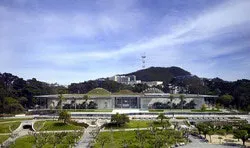
The new California Academy of Sciences is now officially the greenest museum in the world. On Oct. 7, the U.S. Green Building Council issued its formal rating for the new academy, awarding the Renzo Piano-designed facility with its highest possible certification--Leadership in Energy and Environmental Design (LEED) Platinum.
The new building, which houses an aquarium, planetarium, natural history museum and world-class research and education programs under one living roof, stands as an embodiment of the academy's mission to explore, explain and protect the natural world. It is now the largest public Platinum-rated building in the world, and with a total score of 54 points, it is also the world's most sustainable museum building.
When the academy was faced with the need to rebuild, the institution's visionary Board of Trustees committed to building a new home that was as sustainable as possible. The LEED rating system is a voluntary, consensus-based standard for evaluating high-performance, sustainable buildings. By earning points across a variety of sustainability categories, buildings can earn a basic certification (at least 26 points), a Silver rating (at least 33 points), a Gold rating (at least 39 points) or a Platinum rating (at least 52 points).
The new home for the California Academy of Sciences was evaluated and earned points across six different categories: sustainable sites; water efficiency; energy and atmosphere; materials and resources; indoor environmental quality; and innovation and design process. Based on a wide range of "green" building technologies and strategies, including recycled building materials, natural ventilation, solar energy generation and an iconic living roof, it was awarded a total of 54 points, exceeding the threshold for a Platinum certification.
"Our goal was to create a new facility that would not only hold powerful exhibits but serve as one itself, inspiring visitors to conserve natural resources and help sustain the diversity of life on Earth," said Dr. Gregory Farrington, the academy's executive director.
Source: PRWeb