U.S. EPA Accepting Comments on Ohio Creek Cleanup Plan
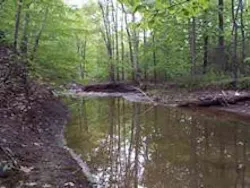
A month-long public comment period began July 15 on a proposed $3.8-million plan to clean a toxic insecticide from soil and sediment in two creeks near the Nease Chemical Superfund site in Columbiana County, Ohio.
The Nease Chemical Co. operated from 1961 to 1973, producing household cleaning products, fire retardants and pesticides, including an uncommon chemical called mirex. Mirex has been listed as a persistent, bioaccumulative and toxic pollutant by the U.S. Environmental Protection Agency (EPA). It is a manufactured insecticide in the form of a white crystalline odorless solid used to control fire ants and as a flame retardant in plastic, rubber, paint, paper and electronics. It was banned in the U.S. in 1978.
The Superfund site covers 44 acres along state Rte. 14, 2.5 miles northwest of Salem on the Columbiana-Mahoning county line. Unlined ponds were used there to treat chemical waste, which seeped into the area's soil and groundwater. Surface water runoff from the waste treatment ponds flowed into nearby Feeder Creek tributaries that run through the site, causing pollution in the middle fork of Little Beaver Creek, which is east of the site.
Rutgers Organics, based in Germany, acquired the property in 1977 but never operated there. The site was placed on the Superfund National Priorities List in 1983.
After reviewing a feasibility study prepared by the responsible party Rutgers Organics Corp., EPA Region 5 evaluated three cleanup alternatives. The agency's $3.8-million plan is considered to be "protective of human health and the environment. It will provide long-term effectiveness and is cost-effective," according to the agency. The plan entails removal of the most contaminated sediment in the middle fork of Little Beaver Creek and removal of Feeder Creek sediment. It includes removal of the most contaminated floodplain surface soil. All of this contaminated soil and sediment will be disposed back on the Superfund site at the former Nease facility, where it will be covered with clean soil, the EPA said.
Separate from the work outlined in this proposed cleanup plan, the EPA approved a cleanup plan in 2006 to address the portion of the Nease site known as Operable Unit 2. Groundwater and mirex-contaminated soil cleanup work for this portion of the site is expected to continue through 2011.
Mirex breaks down slowly in the environment and may remain in soil for years; it can build up in fish or other organisms that live in contaminated bodies of water, and it can also build up in animals or people who eat contaminated fish. The EPA has stated on its website, "We are not sure now Mirex affects people's health, but it may cause cancer and can affect the skin, liver and nervous and reproductive systems. Exposure to Mirex happens from eating food or touching soil containing the chemical."
Comments will be accepted online via www.epa.gov/region5/sites/nease, where background information and a current fact sheet can be viewed. The EPA will choose a final cleanup plan after reviewing all comments received during the comment period. The agency may modify its proposed plan or select another of the options outlined at the public meeting or in the fact sheet.
Source: Environment News Service