Chicago Paves the Way for Street Sustainability
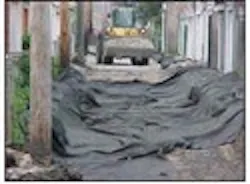
The city of Chicago comprises approximately 2,000 miles of small service streets--what local officials say covers the space of about five midsize airports--mkaing it America's alley capital.
These alleys alleviate traffic congestion and house garbage bins and garages for city residents. But the extra streets are also prone to flooding and dump excess runoff into an already strained sewer system.
To address these storm water-related issues, city leaders have decided to retrofit Chicago's alleys with environmentally sustainable road-building materials as part of their Green Alley initiative. Experts have stated that Chicago's plan is one of the nation's most ambitious public street makeover plans.
A "green" alley refers to one which allows rainwater to penetrate the soil through permeable concrete or porous asphalt. The water is filtered through stone beds beneath the permeable surface layer, and rather than pollute local water bodies as runoff, it recharges the underground water table. Some of the rainwater may even wind up back in Lake Michigan, from which the city draws billions of gallons of water annually.
"The question is, if you've got to resurface an alley anyway, can you make it do more for you?" said Green Alley Project Director Janet Attarian.
The new pavements will also reflect the sun's heat, helping keep city dwellers cool on hot days and warm one cold ones. The green alleys will feature energy-conserving lighting, according to Chicago officials. By year's end, the city will have completed 46 green alleys, and all future alley refurbishments will follow the green model.
Some Chicagoans have questioned the city's plan, noting that perhaps recycling and public transportation should receive the alley project funding. City leaders, who have launched a number of green programs in recent years, said alley construction costs are offset by those of maintenance and sewer improvements that the old alleyways would have needed.
The new alleys will require maintenance to ensure their pores remain unclogged, but Attarian said she believes the cost is competitive. Chicago pays about $46 per cu yd for the permeable concrete, but ordinary concrete costs $50 or more per cu yd, according to Attarian.
Michael David Martin, an associate professor and associate chairman for Iowa State University's Department of Landscape Architecture, specializes in the study of alleys and neighborhoods. "The alley is not only functional," he said, "but an educational green landscape that is helping a city experiment with design and different ways to handle water."
Source: New York Times