Maryland County Faces Hefty Cleanup Price Tag
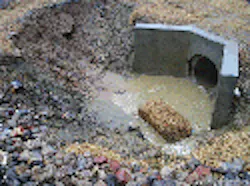
Storm water woes took a turn for the worse yesterday in Anne Arundel County, Md., when a county engineer said that removing existing waterway pollution and preventing additional contamination would cost up to $5 billion.
"That's billion. With a 'B,'" County Auditor Teresa Sutherland told the county council.
This figure has reframed the ongoing debate over implementing an excise tax to address storm water problems. Council representatives and environmentalists have since said that more drastic measures may be in order.
The $5 billion price tag includes all costs to fix polluted streams, install pollution control technologies in new homes and retrofit older neighborhoods with updated storm water systems, according to Chris Phipps, deputy director for the county's engineering bureau. Repairing the county's streams and rivers alone, he said, will cost $1.3 billion. Phipps added that these rough estimates could mean the actual dollar amount tally could end up billions higher.
"It's hard for us to model," Phipps said. "I don't know if we've ever tried to estimate before; the problem is so huge."
Storm water runoff has a number of negative environmental effects on the Chesapeake Bay's water quality. Phosphorous, nitrogen and sediment in the runoff reach waterways, smother oysters, usher in toxic algae blooms and choke fish.
If the county's estimates hold up, addressing Anne Arundel's storm water issues would cost every resident, children included, about $10,000. The proposed excise tax, called the Stormwater Management and Restoration of Tributaries (SMART) fund, which was expected to raise $5 million annually, would take 1,000 years to cover the tab.
"Now it's almost laughable," said R-Severn's vice chairman Ed Middlebrooks of the proposal, which would charge people who create new impervious surfaces such as buildings and parking lots. "It's almost like you feel good, but what are you accomplishing?"
Several council members and environmentalists have argued that the tax focuses too much on new construction, practically ignoring existing problems.
"It's a window dressing," said Councilman Jamie Benoit. "It exalts form over substance."
John R. Leopold, the county executive who proposed the SMART fund, said his plan is better than nothing and approaches storm water problems realistically. "It is a measured and balanced initiative that respects both the need to address our serious storm water management problems and the fiscal realities of Anne Arundel County, which is a conservative, tax-adverse county... We've got to try to solve as much of the problem as we can."
Councilman Cathy Vitale is preparing an alternative plan to grant developers and homeowners who invest in best management practices a tax break.
Council Chairman Ron Dillon has proposed a flat $25 fee for every taxpayer. "Why don't we just put a fee for everyone rather than trying to pin the costs of past sins on the new development?" he asked. The flat fee, which would raise about $12 million a year, "is the fairest way," he added. "I think it's the only way to create enough money to save the bay."
Currently Anne Arundel County invests about $11 million on storm water projects each year. Environmentalists have lobbied for three years for a $60-a-year storm water management fee, finding all other proposals lacking in terms of covering ultimate costs.
"Nothing that's currently proposed is going to give us enough money yet," said Anne Pearson, director for the Alliance for Sustainable Communities. "We need to get a start on the problem quickly and help people understand how grave it is."
Severn Riverkeeper Fred Kelly agreed, saying, "The only nice thing I can say about the SMART fund is it's something. We should be doing everything. We shouldn't be doing baby steps."
Source: hometownannapolis.com