Overwhelming Vote for Water Resources Act Answers Bush Veto Threat
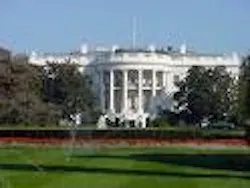
Despite the looming threat of a presidential veto, the U.S. Senate today passed the Water Resources Development Act (WRDA) conference report by a vote of 81-12. The Senate passage follows House approval in August by a vote of 381-40. The bill authorizes flood control, navigation and ecosystem restoration projects.
The law now goes to President George W. Bush for his signature, but the administration has signaled that the president will veto the bill when it gets to his desk. Still, there is thought to be strong bipartisan support for the WRDA, making a veto override possible.
The legislation authorizes nearly $7 billion for wetlands restoration and flood control projects to put Louisiana on the path to Category 5 storm protection, plus dozens of other critical water projects nationwide.
Senator Barbara Boxer, a California Democrat who chairs the Senate Environment and Public Works Committee, said that to get the bill passed she worked closely with the ranking Republican on the committee, Senator James Inhofe of Oklahoma.
"Senator Inhofe and I share a commitment to shoring up our nation's infrastructure. We have a true partnership on this issue, and we stood shoulder to shoulder to get this bill done," Boxer said today. "Together we have been able to accomplish in nine months what gone unfinished for seven years."
"This is a truly bipartisan bill that meets our communities' and our nation's water infrastructure need, and it does it in a fiscally responsible way. Some of the communities this bill will protect have waited years for these projects, and many of them are vital to protecting our nation's wetlands, navigation routes and recreation opportunities. It is crucial to our country's economy," Boxer said.
The bill reforms the way the Army Corps of Engineers does its work by ensuring future projects receive serious analysis and careful implementation. Senator Inhofe said that today's overwhelming bipartisan vote in the Senate "sends a clear message to the president: don't veto this critically important infrastructure bill."
"The WRDA bill, which is actually WRDA 2002, 2004, 2006 and now 2007 all rolled into one, is long overdue," Inhofe said. "I commend the hard work of my colleagues on both sides of the aisle to complete work on this important bill that authorizes and modifies numerous critical projects in the areas of navigation, flood damage reduction, hurricane and storm damage reduction and environmental restoration in a reasonable and responsible manner."
"As the most fiscally conservative member of the United States Senate, as ranked by the American Conservative Union, I have long argued that the two most important functions of the federal government are to provide for the national defense and to develop and improve public infrastructure," he continued. "That means I am not shy about voting for increased authorization and spending on national defense needs or public infrastructure. Hurricane Katrina in August 2005 was one wake-up call as to the tragic consequences of ignoring or shortchanging our nation's infrastructure needs. The bridge collapse in Minneapolis last month is another example of why we cannot take our aging infrastructure for granted."
Louisiana Governor Kathleen Blanco, a Democrat, tonight urged President Bush to sign the Water Resources Development Act of 2007 into law. "I am asking the president to rescind his veto threat and sign this bill into law," she said. "WRDA will authorize billions of dollars to strengthen Louisiana's levees and to protect our coast. We have waited years for WRDA, and we cannot wait any longer. If we are to be prepared for future storms, we must act now."
WRDA would authorize $3.6 billion in critical restoration and protection projects for Louisiana, including the Morganza To The Gulf Hurricane Protection Project and the closing of the Mississippi River Gulf Outlet. Money would also be dedicated to restoring coastal marshland and strengthening levees along the state's rivers.
Senator Inhofe saw his home state of Oklahoma flooded this year and said preventative infrastructure maintenance helped save the country billions of dollars. "During this summer's flooding events in the Oklahoma-Texas-Arkansas region, Corps of Engineers projects prevented an estimated $5.4 billion in damages," he said today. "We must be willing to spend sufficient taxpayer dollars to properly maintain, repair and replace our critical infrastructure."
"The issue here is not about the WRDA bill," he continued. "It's about the authorization process. Authorization is the best tool we have for keeping discipline over the annual appropriations process. Without regularly enacted WRDA bills, the Appropriations Committee faces enormous pressure to use the annual spending bills to authorize and fund projects that haven't gone through a full Congressional review."
"We certainly did not include every project request we received. We reviewed each request and made a determination as to whether it merited authorization. This bill allows certain projects to get in line for funding; it does not actually fund any projects," Inhofe said. "Every day that goes by without enacting a WRDA bill is another day we allow unnecessary pressure tot build on the appropriations to short-circuit the authorization-then-appropriations process."
Senate Majority Leader Harry Reid of Nevada said today that WRDA will help address the water needs of his fast-growing but arid state. "Nevada's enormous growth and many water quality issues have created several challenges for our infrastructure, and the projects that this bill authorizes will go a long way toward addressing those needs," he said.
The bill authorizes more than $200 million in funding for Nevada projects that will improve and maintain flood control projects and address critical water supply and quality needs, as well as restore ecosystems.
Some $50 million of that total is authorized to increase the existing Army Corps of Engineers program that provides technical assistance and project costs reimbursement for meeting rural Nevada's water quality needs.
The WRDA legislation provides authorization for seven 1,200-ft locks on the Upper Mississippi and Illinois rivers. WRDA is crucial to farmers who depend on the inland waterway system to deliver their crops to the global marketplace and to businesses who rely on the system to move their raw materials and products.
National Corn Growers Association President Ken McCauley said, "It's unfortunate the administration is threatening veto. Our infrastructure cannot keep pace with demands and is falling apart. We must upgrade the lock system on the Upper Mississippi and Illinois rivers to compete in the global marketplace. Our hope is the president will take seriously his responsibility to ensure our nation has a safe and viable infrastructure by signing WRDA into law. Ignoring that responsibility is a dangerous gamble."
Today President Bush has been at the United Nations participating in the secretary-general's high-level meeting on climate change, and the White House has given no indication as to whether he is reconsidering his veto threat.
Source: Environment News Service