Indianapolis Condo Project to Incorporate City’s First Extensive Green Roof System
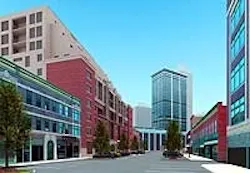
A new condominium project in downtown Indianapolis will incorporate a green, environmentally friendly roof, one of the first of its kind in the area. Halakar Properties and Pillar Investment, developers for the 3Mass project, along with Schmidt Associates, architect for the 3Mass condominiums, unveiled plans for an innovative solution to rainwater drainage from the 10-story, 44-unit project at the 3Mass official groundbreaking.
“Normally in a dense urban development project, we’d have to build a storage system that would hold rainwater from the roof and then release the water slowly into storm sewers. That is a costly solution on a number of fronts,” said Todd Maurer, principal at Halakar Properties. “We found a better way to deal with storm water that will be environmentally friendly and less expensive as well as provide a social gathering space for residents.”
Indianapolis currently has some deep or “intensive” green roof systems at the Indiana State Museum, the Indianapolis Museum of Art and the downtown Westin Hotel. However, the 3Mass project will be the first “extensive” green roof system, which is lighter in weight and composed primarily of minerals like expanded shale, sand and compost instead of yard soil.
According to Schmidt & Associates architect Kevin Shelley, AIA, the 3Mass green roof will place a thin, 4- to 6-in. layer of planting media on top of a more traditional waterproofing roof. The media will be planted with specially selected ground covering plants. In parts of the roof, deeper areas of planting media will contain small ornamental trees and grasses to control views nd enhance visual interest.
If the 3Mass extensive green roof reaches saturation, the excess rainwater will be slowly released into the city storm water system, but the water will be cleaner than when it fell. The green roof soil and vegetation will filter particulates from the rainwater—including those that contribute to acid rain—yielding cleaner water released to the storm system.
Urban buildings with black roofs create a “heat island” effect, while green roofs with growing space are typically much cooler, and save heating and cooling costs and put oxygen back into the air through the plants. Green roofs have been used for a number of years in Europe, particularly in densely populated urban areas with limited land. In Stuttgardt, Germany, the use of green roofs is nearly mandatory in certain forms of construction.
Source: Halakar Properties and Pillar Investment