Florida utility gains control of I&I with flow monitoring
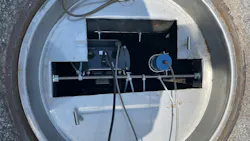
Rather than smoke testing miles of pipe to chase a leak, Emerald Coast Utilities Authority is using open channel flow monitoring to pinpoint inflow and infiltration problems before they become sanitary sewer overflows.
ECUA provides water, wastewater and sanitation services to Florida's Escambia County, with a total combined capacity of 33.1 million gallons per day across three water reclamation facilities.
The utility's sanitary sewer system serves about 90,000 customers through nearly 900 miles of gravity main pipes and 300 miles of force main. Additionally, ECUA manages about 35,000 maintenance holes and 400 lift stations. In recent years, the area's high rainfall and aging infrastructure led to inflow and infiltration problems and costly sanitary sewer overflow events for utility staff to manage.
"Tracing rainfall inflow is very important for us, because we're in the top three rainiest cities in the lower 48," said Mark Evan Robertson, manager of wastewater infrastructure at ECUA. "Because we have a high groundwater table, the infiltration is pretty consistent. But during a rain event, monitoring the inflow can help us to narrow down [areas in the system that may be leaking and] we need to investigate."
Robertson and the ECUA team worked with Badger Meter to monitor changes in its collection system and to prevent rainfall inflow and costly overflow events.
Initial deployment details
ECUA's SCADA system provides lift station health data, including runtime reports and alarms for high water levels. This information is used to identify areas within the sewer network that may have a leak so that field crews can be assigned to investigate specific sites for sewer rehabilitation work.
The utility's initial installation included eight Raven Eye 2 flow meters with ultrasonic level sensors for operational awareness to monitor sewer levels and prevent overflows and leaks in the network.
The Raven Eye 2 is an advanced, non-contact radar area and velocity flow meter that provides accurate and reliable flow data for monitoring and I&I detection while reducing the need for field maintenance.
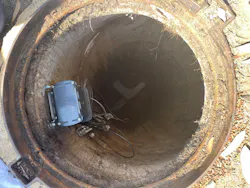
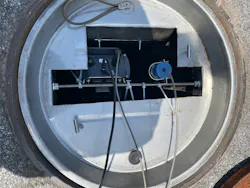
"A lot of our basins are really tiny, and therefore a pressure or area velocity meter that sits in the flow line wouldn't be the best choice for these sites," said Robertson. "These units and data loggers can pick up such minuscule flow amounts that it's better for our operation here."
In addition, several RG-32A Rain Gauge Recorders are installed at locations with rain tipping buckets. The wireless, battery-powered, single-channel rain gauge recorder is used to confirm rainfall data along with the lift station data for greater insight. Flow monitoring data is sent to remote monitoring software, allowing operators to view rainfall data and site-specific data together in a simple system.
"Data from the rain gauges is used in conjunction with lift station data," Robertson explained. "If there is a runtime difference between a dry spell and a rain event, this may indicate the need for a closer look by our field staff."
In some larger trunk mains, ECUA is installing Beluga Submersible Area Velocity flow meters. Both the Raven Eye 2 and Beluga devices are used in conjunction with the RU-35 data logger, delivering a solution for open channel flow monitoring, CSO and SSO monitoring, RDII analysis, surcharge monitoring and custody transfer billing.
Putting the system to the test
During a recent 4-inch rain event, five lift stations reported high water level alarms. Robertson immediately deployed the level monitors in these locations to monitor water rates over about a month.
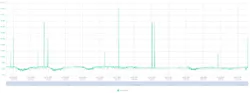
Typically, the utility would have performed smoke testing to find and repair a leak, but positioning the devices to isolate several mains, ECUA was able to test a couple hundred feet in a sample versus a few miles of pipe.
"We just don't want to go smoke test an entire basin, because it's just not cost effective to just have our employees out there, spinning their wheels trying to find [a leak]," Robertson said. "[Deploying these devices] is like having another employee there, collecting data [so that we can be precise in our response]."
In one area, the utility was able to identify six to eight lateral breaks where water was coming directly into the sewer system via a stormwater ditch, without the time and drain on utility departments associated with smoke testing an entire basin.
Building a collection system action plan
As part of the requirements of the utility's consent decree, staff are currently developing a collection system action plan to meet flow monitoring requirements.
"Part of our consent decree requirements includes pipe inspection, so we can use these devices to cover that requirement," Robertson said. "We can continue to add devices to the system and expand the coverage area for complete monitoring of all areas [in the future]."
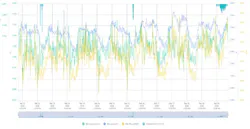
With trend reporting, users can see when results fall outside of typical values and investigate the highest change rates first for early response. The data helps operators and field staff focus their efforts and decreases response time for I&I events.
"Instead of level indication, the ultimate goal would be to fix all your inflow problems and monitor your flow and then see if a new inflow problem arises," Robertson said.
Next steps
With these level indicators in place, Robertson is working on tracing rainfall inflow data for a neighborhood previously identified for a sewer rehabilitation project. This pre-basin rehab data set will be compared against the post-rehab data to confirm the effectiveness of the system.
About the Author
George Elaro
Sales Engineer
George Elaro is a water industry veteran, with 35 years of experience in the industry. He is currently a Sales Engineer at Badger Meter. Email him at [email protected].