42 percent of states have no street sweeping language in their MS4 permits
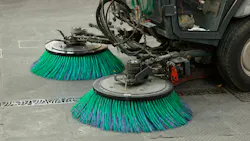
Street and power sweeping to keep streets, roadways and parking lots clean has been a well-established practice since before the advent of the automobile. Starting with basic sweepers and progressing to more advanced technologies, such as vacuum and regenerative air sweepers, the role of street sweeping has evolved from addressing trash and street dirt for maintenance and aesthetics to addressing these and other contaminants for environmental purposes. The projected growth in the sweeper industry is based primarily on these environmental services.
Early research exploring the connection between street cleaning activities and stormwater pollution suggested that the capacity for sweepers to make a significant contribution toward pollution reduction was limited. Subsequent research has shown that these initial findings were wrong, as the ability to address roadway particulates successfully and at meaningful levels has been conclusively proven.
Further research has dug into specifics on the level of treatment and the types of particulates addressed, in the context of varying technology types as well as operational and other factors that influence overall effectiveness. For instance, developing research efforts suggest that regenerative sweepers are particularly effective when targeting microplastics, while basic sweepers are best when addressing organic and leaf litter. Other research efforts note that top operational considerations affecting sweeping efficacy include parked cars limiting sweeper access to captured street dirt and the skill and experience of the sweeper operator, while situational factors include tree canopy adjacent to planned roadways and the condition of the roadway.
The more research is performed, and the longer the track record in the field, the clearer it becomes that street sweeping and cleaning is not only technically effective but also cost efficient, as noted by the American Society of Civil Engineers as well as the U.S. EPA. Since this non-structural stormwater practice has so many clear advantages, the use of street sweeping to address roadway particulates and other pollutants must be commonly used by communities to meet stormwater goals, right? Wrong. Most communities that engage in sweeping are driven by aesthetics and general maintenance, not environmental services. But how can this be?
What is missing at this point are policies that translate the research data and experiential results showing the effectiveness of street and power sweeping activities to address stormwater pollution from streets and parking lots into quantifiable and specific regulatory credits. This is one of the goals of the Clean Streets = Cleaner Waters initiative, known as CS=CW, led by the National Municipal Stormwater Alliance with support from key sweeper manufacturers, operators and networkers in the sweeper industry.
The CS=CW initiative is the first organized effort at the national level to bring together the street sweeping sector with the stormwater sector to explore the development of future pathways to consistent, metrics-based regulations based on the performance of street sweeping equipment and activities. This initiative has found, for instance, that a plurality of states, 42%, in the U.S. include no language in their MS4 general permits on street sweeping activities, and those states with street sweeping policies typically do not have well-developed provisions that include critical factors such as seasonality and consideration of specific technology used, and they lack meaningful and quantifiable performance metrics.
The work for this initiative has just started, and there is a lot more to do. There is a need for consistent and standardized metrics to reflect the performance of street and power sweeping activities, and these metrics are needed for both organic debris and street dirt particulates. Performance testing standards are also needed for the variety of street sweeping technologies in use today. Having robust testing standards will support environmental technology verification programs such as the Washington Technology Assessment Protocol-Ecology program, known as TAPE, and the Stormwater Testing and Evaluation for Products and Practices program, known as STEPP, and enable these programs to generate trusted performance data on sweepers. This trusted data is needed for regulators to develop specific and measurable regulatory credits for sweeping activities.
While street sweeping is an effective non-structural stormwater practice, stormwater programs must think holistically and not rely on any single "silver bullet" practice like sweeping to address all regulatory requirements. A robust program needs to consider not just water quality but also water quantity issues, so nature-based, retention-based practices are still needed to regain the hydrologic integrity of urban watersheds. This balanced approach to stormwater management drives value for water quality as well as community benefits.
Street and power sweeping has benefits beyond water quality, as effective street sweeping can reduce clogging of street drains and pipes, which can exacerbate resiliency challenges associated with pluvial flooding. Additionally, reduced amounts of gross solids, organic debris and street dirt resulting from a well-planned and executed street sweeping program can reduce the frequency of needed maintenance activities for downstream stormwater control measures.
About the Author
Seth Brown
Seth Brown has over 25 years of experience in the water sector and is the Principal and Founder of Storm and Stream Solutions, LLC, a consulting firm providing a range of services from policy and alternative project delivery analysis in the stormwater sector to facilitation and training services focused on stormwater topics. He was the Director of Stormwater Programs at the Water Environment Federation from 2010-2015 and is currently the Executive Director of the National Municipal Stormwater Alliance, which is a 501.c.3 representing stormwater-focused organizations in 24 states across 9 of the 10 U.S. EPA regions with a network that is comprised of over 4,000 MS4s.
Seth has a Ph.D. in civil engineering from George Mason University with a research focus on socio-economic modeling of incentive-based investments of green stormwater infrastructure on private properties. He leads courses in Green Infrastructure and Innovative Water Partnerships at Virginia Tech and the University of Maryland at Eastern Shore and is a licensed professional engineer in the state of Maryland.