Why your stormwater system is one storm away from a six-figure repair bill
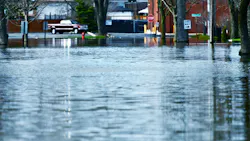
One storm does not create a catastrophic stormwater failure. It simply exposes years of neglect. The question is not whether your system will be tested. The question is whether it is ready. Stormwater ponds look calm. Catch basins quietly collect runoff. Culverts disappear beneath roads, and outlet structures blend into the landscape. Most people drive past these systems every day without giving them a second thought, until they fail.
Then headlines read, "Road closed due to sinkhole," "Neighborhood flooded after heavy rain," or "Emergency repairs underway following culvert collapse." The repair costs can easily exceed $100,000, and in many cases climb well into the millions. The surprising part is that most of these failures were preventable.
The most important infrastructure you never notice
Every neighborhood, shopping center, apartment complex, office park, golf course and industrial site depends on a hidden network of stormwater infrastructure. Detention ponds, underground pipes, junction boxes, culverts, forebays, spillways, headwalls and outlet structures work together to safely convey and treat stormwater before it reaches downstream waterways.
Unlike roads or buildings, these systems are only noticed when they stop working. That is precisely why so many communities fall behind on maintenance. Out of sight often means out of budget. Unfortunately, water does not care about budgets.
Every rain event changes the system. Every gallon of runoff carries sediment, organic matter, trash, leaves, nutrients and debris. Over months and years, ponds lose storage volume. Pipes accumulate sediment. Outfalls become undermined. Riprap shifts. Embankments weaken. Invasive vegetation blocks flow paths. The deterioration is gradual, so gradual that many communities do not recognize a problem until a major storm arrives. That storm is not the cause of failure. It is simply the final stress test.
The hidden cost of doing nothing
Deferred maintenance may seem like saving money. In reality, it is borrowing against the future at an extremely high interest rate. A small erosion repair today may cost a few thousand dollars. Ignore it, and eventually the slope fails, requiring excavation, engineering, imported fill, geotextile reinforcement, riprap stabilization and landscape restoration.
A pipe joint that separates underground may initially require only a localized repair. Wait too long, and soil begins migrating into the pipe, creating underground voids that eventually collapse beneath roads or parking lots. The result is emergency mobilization, traffic control, utility coordination, pavement replacement and regulatory oversight. The invoice grows exponentially.
The stormwater asset most communities never inspect
If asked about the condition of the clubhouse roof, most homeowners association boards could answer immediately. Ask about the condition of the 36-inch reinforced concrete pipe buried beneath the main entrance road, and the answer is often silence. Yet that pipe may convey millions of gallons of water every year.
Many underground systems have never undergone a closed-circuit television, or CCTV, inspection since they were installed. Cracks, root intrusion, joint separation, corrosion and structural failures remain hidden until the surface gives way. By then, the repair extends far beyond the pipe itself. Preventive inspections cost a fraction of emergency reconstruction.
Your pond is an engineered structure, not a decorative lake
One of the industry's biggest misconceptions is treating stormwater ponds like landscape features. They are engineered hydraulic systems designed to detain runoff, trap sediment, improve water quality and reduce downstream flooding. Every inch of accumulated sediment reduces storage capacity. Every eroded shoreline introduces additional sediment. Every clogged outlet changes hydraulic performance. Eventually, the pond can no longer perform as designed. When rainfall intensity increases, the consequences become immediate. Water rises higher, flows faster and seeks new paths, often through embankments, across roads or onto private property.
The domino effect
Stormwater failures rarely happen in isolation. A clogged outlet raises water levels. Higher water levels accelerate shoreline erosion. Erosion fills the pond with sediment. Reduced storage increases peak water elevations. Higher velocities damage the outfall. The damaged outfall undermines the pipe. The pipe settles. The roadway settles. Then comes the sinkhole. What appears to be a sudden collapse is actually the final chapter of a story that began years earlier.
Why HOAs are especially vulnerable
Many homeowners associations inherit sophisticated stormwater systems but operate with limited technical guidance and constrained budgets. Maintenance is often deferred in favor of visible amenities that residents notice immediately. But residents rarely compliment a functioning detention pond. They absolutely notice flooded streets, collapsing sidewalks or emergency special assessments. Stormwater infrastructure should be treated as a long-term capital asset with annual inspections, reserve funding and scheduled maintenance, not as an afterthought.
One inspection can save six figures
The highest return on investment in stormwater management is not a new pond. It is information. Professional inspections identify sediment accumulation, structural deficiencies, hydraulic bottlenecks, pipe deterioration and erosion before they become emergencies. Instead of reacting to failures, communities can prioritize repairs based on risk and budget availability.
Planned maintenance is predictable. Emergency reconstruction is not. The difference between the two often determines whether a board approves a manageable repair or imposes a painful special assessment on every homeowner.
Water always wins
Stormwater follows one simple law. It will always find the path of least resistance. If that path is through a compromised embankment, beneath a roadway, around a damaged headwall or through a separated pipe joint, water will exploit it relentlessly. It never gets tired. It never stops. It simply waits for the next storm.
The future of stormwater is asset management
The most successful communities are changing the way they view stormwater. They are implementing annual inspections, using CCTV technology, deploying drones, tracking assets with geographic information system, or GIS, monitoring sediment accumulation and planning rehabilitation years before failure occurs. They are shifting from reactive spending to proactive investment. And they are saving hundreds of thousands of dollars in the process.
The financial conversation every board should be having
Every year, homeowners association boards and property managers sit around a table to discuss budgets. Landscaping contracts are reviewed. Pool maintenance is renewed. Clubhouse improvements are debated. Roads and sidewalks are inspected. Yet one of the community's most valuable assets is often left off the agenda entirely. Stormwater infrastructure.
The irony is that stormwater systems protect every other investment within the community. They protect roads from washouts, sidewalks from settlement, landscaping from erosion, homes from flooding and property values from the consequences of failing infrastructure. A community may spend hundreds of thousands of dollars beautifying entrances and common areas while unknowingly allowing its detention pond to lose critical storage capacity or its underground conveyance system to deteriorate beyond repair.
Emergency repairs are rarely planned. They often require immediate mobilization, expedited engineering, emergency permitting, traffic control, utility coordination and premium labor costs. In many cases, associations are forced to levy special assessments because reserve funds were never established for stormwater infrastructure.
The communities that manage stormwater successfully are not necessarily the ones with the largest budgets. They are the ones that understand stormwater is not simply a maintenance responsibility but an asset management responsibility. Every inspection, every maintenance activity and every proactive repair is an investment in resilience.
As rainfall patterns become more intense and development continues to increase runoff volumes, the margin for error continues to shrink. Systems that once performed adequately are being asked to manage greater hydraulic loads than ever before.
Stormwater infrastructure works quietly in the background, protecting lives, property, businesses and the environment every time it rains. Its greatest strength is that nobody notices it when it is functioning properly. Its greatest weakness is that nobody notices it when it is slowly failing.
The next major storm will not decide whether your system succeeds or fails. That decision has already been made by years of maintenance or years of neglect, and the most expensive repair is almost always the one you chose to postpone.
About the Author
Joseph Garavelli
Joseph Garavelli is the founder and senior environmental consultant at EcoTactics, specializing in erosion control, stormwater systems, and water quality solutions throughout South Carolina. He also provides consulting support for Ecological Improvements on environmental and infrastructure-related projects.