Five factors to guide BMP selection for urban stormwater projects
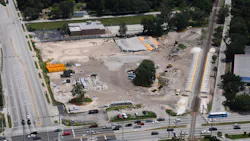
As urban areas continue to grow and redevelopment accelerates, stormwater management professionals are facing increasingly complex challenges. Managing runoff volume, decreasing erosion, reducing peak discharge rates and improving water quality are still important attributes for most stormwater management projects. However, the urban environment presents a unique set of constraints that often make project implementation significantly more difficult than in greenfield or suburban settings.
This is primarily because urban areas contain more impervious areas, meaning a larger percentage of rainwater that falls needs to be managed to help it properly leave an urban site.
In a large grass-covered area, for example, a majority of the rainfall, around 60%, is retained on site, and the remaining 40% discharges elsewhere. Urban areas behave very differently. Due to extensive impervious surfaces, as much as 90% to 95% of rainfall leaves the site almost immediately because there's nowhere for it to go.
The unique set of constraints for urban stormwater management projects is particularly evident when it comes to selecting the appropriate best management practices, or BMPs. The decision process quickly becomes more complex than simply selecting a few items from the list of BMPs provided by the U.S. Environmental Protection Agency.
Successful urban stormwater designs consider these challenges early and incorporate them into the BMP selection process. The following are important factors that should help guide BMP selection for urban stormwater management projects to help ensure the project successfully meets both short-term and long-term objectives.
1. Urban runoff contains a complex mixture of contaminants
One of the most important considerations in urban stormwater management is the nature of the pollutants being generated. Urban runoff contains a complex mixture of contaminants that differ substantially from those typically found in undeveloped areas. Roadways, parking lots and transportation corridors generate tire wear particles, microparticles, oil and grease, heavy metals and other contaminants that can be carried into stormwater management systems during rainfall.
Tire particles, in particular, have received growing attention in recent years due to their prevalence in stormwater runoff and their potential impact on aquatic ecosystems. According to the EPA, one tire will shed between 2 and 14 pounds of rubber particles due to road wear. Research has also shown that a chemical released from tires is toxic for coho salmon and other fish.
Professionals involved in stormwater management need to consider BMPs that can remove fine particles and associated contaminants. Systems that incorporate filtration, media treatment, bioretention or other advanced treatment mechanisms may provide significant advantages over practices designed primarily for flow or volume control.
2. Limited space often requires out-of-the-box thinking
In most urban settings, available land is at a premium, with stormwater management systems often having to work within small, constrained footprints. Large surface detention ponds and expansive treatment wetlands commonly used in suburban developments are often not feasible in densely developed urban environments.
The challenge becomes even more pronounced during retrofit projects, where engineers must improve stormwater performance within a limited footprint without significantly disrupting traffic flow, ongoing property use and basic city life in the area. Disruptions caused by the project can introduce additional costs related to traffic control measures to divert traffic around a lane closure or to an off-ramp of a highway.
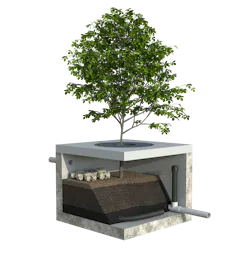
As a result, compact and multifunctional BMPs have become increasingly important. Subsurface systems, permeable pavements, tree trenches, green roofs and bioretention practices can provide stormwater benefits while preserving valuable surface space. High-density, multifunctional infrastructure also allows cities to filter and store runoff underground. For instance, underground stormwater storage systems, such as modular polypropylene, or PP, crate systems, are gaining traction as efficient solutions for detention, retention and infiltration applications beneath parking lots, roadways and urban developments. These systems can be designed to handle exceptionally large capacities or scaled down to fit within tight spaces.
3. Changing rainfall and weather patterns
When it comes to stormwater management, most of the current regulations, standards and design models are based on outdated precipitation data. Using historical rainfall records has quickly become a flawed approach to stormwater management because it does not take into consideration the ongoing impact of the change in weather patterns. From a design and capacity standpoint, many of the existing systems in urban areas are unable to handle the increased rainfall intensity.
In fact, a study from the University of Wisconsin-Madison and Carnegie Mellon University makes the case that stormwater infrastructure designed using the 100-year storm and the intensity-duration-frequency, or IDF, curves developed by the National Oceanic and Atmospheric Administration is inadequate to deal with today's storms. NOAA is currently updating U.S. precipitation frequency standards to account for climate trends. When released in September 2026, the Atlas 15 project will become the federal government's new authoritative dataset for the planning and design of infrastructure.
When evaluating BMP options, stormwater professionals should not only consider current regulatory requirements but also future performance needs. Flexible systems that can be expanded, modified or integrated with future improvements can provide significant benefits when designing stormwater management projects to meet the challenges posed by the changing weather patterns. Incorporating resilience into BMP selection can help improve the system's ability to manage increasingly unpredictable weather conditions.
4. Ongoing maintenance impacts system performance levels
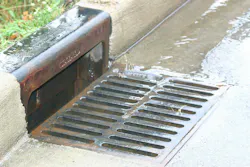
Even the most sophisticated stormwater BMP will fail to achieve its intended performance if it is not properly maintained. Unfortunately, maintenance is often one of the most overlooked aspects of stormwater management planning. While ongoing maintenance is important for all stormwater management systems, it is especially vital for those located within urban areas. It is equally important to maintain those aging systems that can leak and crack, and those BMPs that might clog and back up.
Urban environments typically generate large amounts of sediment, trash and debris that can reduce BMP effectiveness over time. If left unchecked, this can result in surface flooding that can shut down or disrupt a heavily trafficked urban area, frustrating motorists, businesses and pedestrians. Systems that are difficult to inspect or access may also experience declining performance before problems become apparent.
Maintainability should be a primary consideration during BMP selection, including access requirements, inspection frequency, sediment removal procedures and long-term operational costs. For instance, BMPs designed to catch pollutants, such as bioretention areas, bioswales, sand filters and hydrodynamic separators, need to be regularly maintained or risk the danger of overflowing.
5. Stormwater needs to be treated like the valuable resource it is
Historically, stormwater runoff has been treated as a nuisance or environmental threat. The primary focus was moving water away from urban and developed areas as efficiently and quickly as possible. As communities experience higher volumes of stormwater and/or water scarcity issues, there is a growing need to view stormwater as a valuable asset that can be harvested and reused.
By incorporating water harvesting in projects where appropriate, municipalities can create a readily available source of water for use in graywater and irrigation applications to help alleviate strains on potable water supplies. When managed and treated properly, stormwater runoff can also be used to recharge aquifers in certain areas of the country.
Consideration should be given to BMPs that support and promote beneficial reuse and water conservation. Practices that retain, infiltrate or reuse stormwater can provide multiple benefits while reducing demands on potable water supplies. While green infrastructure solutions may be a viable option, it is important to ensure that the solution provides the capacity and performance level needed for the application.
When selecting BMPs for urban stormwater management projects, stormwater solution providers can be a valuable resource. Providers who have experts on hand can help identify design requirements and create site-specific solutions based on those requirements, helping identify appropriate BMP options for the project.
This includes not only regulations and building codes, but also site constraints, preferences of communities, soil characteristics, pollutant load, water flow and area rainfall. They can take a macro-level view of these factors to make sure the goal of the project is feasible and to determine what type of stormwater solutions would best meet that goal. Engaging the supplier in the pre-planning phase can present a valuable opportunity to explore new options and technologies that are available. Some stormwater solutions providers have state-of-the-art hydraulics labs where they can test and validate BMP performance under a variety of scenarios that allow them to predict real-world performance.
As urban development becomes more challenging and weather patterns become less predictable, BMP selection must evolve from a purely engineering decision into a strategic investment in urban resilience. Selecting the right BMPs for urban stormwater management requires balancing a wide range of considerations to help ensure the long-term success of the project.
About the Author
Dan Figola
Dan Figola is the director of engineering and environmental strategy at Advanced Drainage Systems. He has been with Advanced Drainage Systems for 23 years and has worked in the field of stormwater management for over 28 years. Throughout his career he has been actively involved in sustainability and water quality initiatives within industry, public and municipal forums. Dan currently serves as a Board Member of the American Rainwater Catchment Systems Association and a Steering Committee member for the Cold Climate Center of Excellence for Stormwater Infrastructure. He graduated from Ohio University with a degree in Civil Engineering and is a licensed Professional Engineer.