Washington's TAPE program: Two decades of innovation in stormwater treatment
Key Highlights
- TAPE uses real-world testing and peer review to verify stormwater treatment systems, ensuring they meet performance standards for pollutant removal.
- The program has approved over 30 technologies, influencing more than 15 state agencies and numerous municipalities nationwide.
- Recent updates include assessments of maintenance cycles and sediment particle size analysis to improve long-term system performance.

For more than two decades, Washington State’s Technology Assessment Protocol – Ecology (TAPE) program has quietly led the nation in how we test and approve technologies that keep polluted stormwater runoff out of our waterways. Administered by the Department of Ecology (Ecology) and supported by the Washington Stormwater Center, TAPE uses a science-based, peer-reviewed process to determine how effectively new systems remove pollutants such as sediment, metals, and nutrients. What began with Washington’s drive to find better ways to manage stormwater, the TAPE program has evolved into a national model of science, transparency, and innovation.
From the Clean Water Act to state leadership
The modern era of stormwater regulation traces back to the Clean Water Act of 1972, which set the foundation for reducing water pollution nationwide. Yet by the late 1980s, one major problem remained: stormwater runoff. In 1990, the Environmental Protection Agency (EPA) launched the first National Pollutant Discharge Elimination System (NPDES) Phase I permit, requiring states to reduce non-point source pollution in stormwater “to the maximum extent practicable.”
The EPA did not dictate how to meet that standard, instead encouraging states to use best management practices (BMPs) and engineering methods suited to local conditions. Washington seized the opportunity. Less than two years later, Ecology published the Stormwater Management Manual for the Puget Sound Basin, becoming the first state in the country to require stormwater treatment for municipal discharges.
That manual targeted two pollutant groups: “Conventionals” (such as total suspended solids, heavy metals, and fecal coliform) and “Nutrients” (phosphorus and nitrogen) - and listed BMPs to treat them.
In 2001, Ecology updated the manual and took the requirements a step further. The updated manual focused on five specific pollutants: TSS, total phosphorus, dissolved copper, dissolved zinc, and oil and introduced performance criteria — numerical treatment goals for pollutant removal. In addition, it expanded the list of BMPs appropriate for treatment. This raised a new question: what about emerging or proprietary technologies not yet listed in the manual?
The birth of TAPE
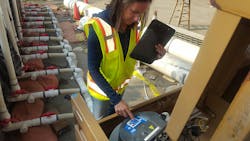
To fill that gap, Ecology worked with a Technical Review Committee to develop a process to verify the performance of new technologies through rigorous, unbiased testing. The result was TAPE, first published in 2002.
TAPE established a framework for testing stormwater treatment systems under real-world conditions. Manufacturers submit field data showing pollutant removal performance, which is then peer-reviewed by a panel of external experts. If the system meets performance goals, it receives a General Use Level Designation (GULD) - granting approval on par with BMPs listed in the manuals.
Since 2002, more than 30 technologies have earned TAPE approval. The program has encouraged manufacturers to innovate, while giving municipalities confidence that new systems perform as advertised. Its influence now extends far beyond Washington — an estimated 15 state agencies and 20-plus cities or counties reference or accept TAPE-certified technologies.
Science, transparency, and trust
What sets TAPE apart is its insistence on robust science and transparency. Every technology must be tested under realistic field conditions and undergo independent, peer-reviewed evaluation.
Two groups of outside experts guide the process:
- The Board of External Reviewers (BER) - stormwater professionals from across the U.S. who review data and make approval recommendations.
- The Stakeholder Advisory Group (SAG) - representatives from municipalities and state agencies in Washington and Oregon who advise on program updates.
Together, these groups help ensure TAPE decisions are grounded in both technical rigor and practical, on-the-ground experience.
Evolving standards: Maintenance and performance
As the program matured, new challenges emerged. Around 2019, TAPE stakeholders noticed that some systems tested at higher hydraulic loading rates, meaning more water per square foot of treatment area, tended to require more frequent maintenance. Smaller, high-rate systems were appealing because they reduced footprint and installation cost but might not sustain long-term performance. This underscored that even the best technologies fail without proper maintenance, but also proper maintenance requires an achievable and predictable maintenance cycle.
To address this, Ecology convened a team from the BER and SAG to tackle the question, how can we better assess the maintenance requirements of BMPs without inhibiting innovation? The outcome, after years of collaboration and a series of public surveys, was the Post-GULD Maintenance Assessment, added in the 2024 TAPE guidance update.
This new requirement evaluates how long systems can operate before “failing,” defined as the point where they can no longer treat 95% of design flow without bypassing. Basic Treatment devices (those approved for TSS removal) must complete this assessment at three different sites (one within the Pacific Northwest) and within three years of receiving GULD approval.
Two testing options are allowed:
- Quarterly Flow Testing - Periodic controlled flow tests using a hydrant or water truck. The test is repeated quarterly to determine whether the system can consistently pass design flows without bypassing.
- Continuous Flow Monitoring – Sensors measure effluent and bypass flows continuously over time, ensuring that flows reach design conditions at least quarterly.
If, during the test, a system cannot achieve its design flow without bypassing, the assessment is concluded, and the duration of operation, expressed as a percentage of the water year, is recorded as the maintenance cycle for that site. At that point maintenance must be performed, and the system tested again to confirm it is back to operating at its design flow and to document the level of maintenance needed to get there. During the process, grab samples for TSS and particle-size distribution (PSD) are collected to contextualize results.
Each system’s GULD document will now include additional maintenance data - site location, land use, pollutant characteristics, and the proportion of water the device functioned with before maintenance was needed. Ecology may recommend sizing adjustments based on these findings, supporting predictable and achievable maintenance intervals.
Fine-tuning for local soils
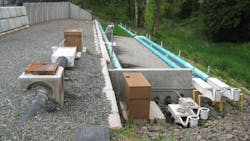
Another recent evolution in TAPE addresses differences in sediment particle size, which significantly affects pollutant removal performance. Washington’s soils are primarily fine-grained silts and clays, meaning particles smaller than 62.5 microns dominate runoff. Systems tested elsewhere — where sediments are coarser — may perform with those coarse soils but may not be as effective under Washington conditions.
To account for this, TAPE is working to develop a method to assess performance across particle sizes. Data from influent and effluent samples must now be analyzed across five size categories:
- >250 µm
- 125–250 µm
- 62.5–125 µm
- 3.9–62.5 µm
- <3.9 µm
If the average influent particle size is greater than 62.5 µm, additional data analysis is required to demonstrate performance with finer sediments. The proposed method takes a step-by-step approach: the largest particle size category is removed from the dataset, the average particle size is recalculated, and this process repeats until most of the particles fall below the 62.5-micron threshold. At that point, new TSS concentrations are calculated for both influent and effluent samples using the included particle size categories, and those results are used to determine overall pollutant removal performance. This ensures that systems verified in other regions can still be confidently applied in Washington.
While the 62.5-micron benchmark reflects Washington’s typically fine, silt-and-clay soils, the same approach could be adapted elsewhere – using different size cutoffs – to match the local character of stormwater sediments, whether they’re finer or coarser.
Setting the stage for national standards
The success of TAPE has led to a larger question: can this model be scaled nationally? The National Municipal Stormwater Alliance (NMSA) is now developing the Stormwater Testing and Evaluation of Products and Practices (STEPP) program, a nationwide verification system for both proprietary and public-domain stormwater controls.
Washington’s TAPE program recognizes the value and significant benefits offered by a national verification program and is helping shape STEPP by lending its expertise, data, and credibility. For now, TAPE will continue operating and refining its methods and protocol. Once STEPP is fully established and proven sustainable, Ecology intends to defer to STEPP verification data when granting new GULDs, fostering consistency across programs.
For more information on the TAPE program please use the following link.
About the Author
Carla Milesi
Carla Milesi is the Emerging Stormwater Technologies Coordinator for the Washington Stormwater Center at the University of Washington Tacoma. As such, she is the lead scientist for the Center’s collaboration with the Washington State Department of Ecology’s Technology Assessment Protocol (TAPE) program. In partnership with Ecology, since 2014 she has managed the operation and development of the TAPE program for certifying emerging stormwater treatment technologies.