Seeing and knowing your stormwater system before it fails
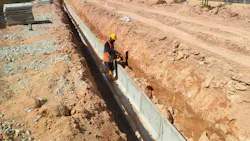
Stormwater systems rarely fail without warning.
What makes this conversation so important is that most systems do not look like they are failing until they are already well beyond the point of simple correction. From the surface, everything can appear stable. Grass is green. Channels are intact. Water is moving. But once you step into the system and actually follow the flow, a completely different reality begins to reveal itself.
Subtle elevation changes begin to matter. Minor constrictions start to stand out. You notice where water is accelerating, where it is losing control, and where it is already beginning to reshape the system around it. These are the moments where experience becomes invaluable, because what looks insignificant to most is often the clearest indicator of what is coming next.
This is where real value is created. Not in reacting to visible damage, but in recognizing the quiet signals that precede it. The ability to see that difference is what separates routine inspection from true system understanding, and it is exactly where long-term performance is either protected or lost.
They communicate long before collapse, overflow, or regulatory violation ever occurs. The issue is not that the warning signs are not there. The issue is that most people are not looking in the right places or at the right time to recognize them.
Across municipal systems, HOA-managed infrastructure, commercial developments, and golf course properties, the same pattern continues to show itself. Systems are typically evaluated only after something has already gone wrong. By that point, what started as a small inefficiency has already progressed into erosion, sediment buildup, structural instability, or hydraulic failure.
The real opportunity exists much earlier. It exists within the system itself, long before failure becomes obvious.
Stormwater systems are not static assets. They are constantly evolving under changing conditions. Many of the systems in place today were designed decades ago under assumptions that simply do not hold true anymore. Rainfall intensity has increased. Watersheds have expanded. Impervious surfaces have grown. Maintenance has often been deferred or overlooked.
What this creates is a gap between the way a system was designed to function and the way it is actually being forced to perform today.
Channels that once handled flow efficiently now experience increased velocities. Banks begin to lose stability. Sediment begins to move and settle in unintended areas. Localized scour develops at key transition points.
These are not random issues. They are signals. Understanding those signals requires more than a quick inspection. It requires physically navigating the system and seeing how water actually moves through it.
True system assessment cannot be done from a single vantage point. It cannot be fully understood through aerial imagery or a set of plans alone. It requires moving through the conveyance path from upstream to downstream and observing how each section interacts with the next. When you take that approach, a completely different picture begins to emerge.
You start to see undersized channels that are receiving flows from areas outside of their original design. You see transition points where velocities increase and begin to create stress on the system. You notice areas where vegetation has been lost and the soil no longer has the reinforcement it once had. You identify early erosion patterns that clearly indicate where future failures will occur if nothing is done.
These conditions are often present long before they become obvious problems. That is where the real value lies.
When these areas are identified early, the solutions are typically straightforward and cost-effective. Small adjustments to flow paths, strategic stabilization, and the introduction of simple energy dissipation features can significantly change the performance of an entire system.
These are not large-scale reconstructions. They are targeted interventions that work with the system instead of against it. This is where natural processes begin to play a major role.
Water wants to find equilibrium. It will adjust its path, its velocity, and its energy until it reaches a condition that it can sustain. When systems are guided properly, that natural tendency can be used to your advantage. Stabilized slopes, reinforced banks, and properly distributed flow reduce long-term maintenance and improve overall system performance.
On the other hand, when these early indicators are ignored, the system continues to adjust in uncontrolled ways. Erosion becomes more pronounced. Channels widen. Sediment accumulates in critical areas. Hydraulic capacity is reduced. Eventually, what could have been addressed with a relatively small effort becomes a much larger and more expensive problem.
At that point, reactive measures take over. Emergency repairs, large-scale stabilization, and in some cases full-system redesign become necessary. The difference between those two outcomes is timing and understanding.
There is a threshold within every stormwater system.
Before that threshold is reached, the system is still manageable through strategic and efficient improvements. After that threshold is crossed, the system begins to dictate the terms, and the cost of regaining control increases significantly. Knowing where that threshold exists is one of the most valuable aspects of professional assessment.
This is also where the importance of the right individual becomes critical. Not all inspections are equal. Not all evaluations provide the same level of insight. Choosing a licensed and certified professional who understands both the engineering principles and the field realities of stormwater systems is essential. Credentials matter because they provide accountability and a foundation of knowledge. Experience matters because real-world systems rarely behave exactly as they were designed on paper.
A qualified professional brings both of those elements together. They are able to interpret what they are seeing in the field and connect it to the underlying hydraulic and environmental processes. They understand how upstream conditions influence downstream performance. They recognize patterns that indicate early-stage failure.
Most importantly, they are able to provide guidance that is not only technically sound but also practical and cost-effective. Trustworthy guidance is built on a combination of education, certification, and real-world experience. It is built on the ability to look at a system as a whole rather than a series of isolated issues.
This is particularly important in environments where multiple entities may share responsibility for stormwater infrastructure. Municipal systems, private developments, and HOA-managed properties often intersect. Water does not recognize property lines. External watershed inputs can have a direct impact on a system that was never designed to handle them. Without proper evaluation, these influences can go unnoticed and unaddressed.
A comprehensive assessment identifies not only the conditions within the system but also the external factors that are contributing to those conditions. This level of understanding allows for solutions that address the root cause rather than just the symptoms. It also opens the door for coordination between stakeholders, which is often necessary for long-term success.
When systems are approached with this level of awareness, the focus shifts from reactive maintenance to proactive management. Instead of waiting for failure, systems are monitored and adjusted as conditions evolve. Instead of large-scale disruptions, improvements are implemented in a way that minimizes impact and maximizes efficiency. Instead of escalating costs, resources are used strategically to extend the life and performance of existing infrastructure. This is where the true value of early navigation becomes clear.
It is not just about identifying problems. It is about understanding how the system functions as a whole and guiding it toward stability and resilience. In many cases, the solutions are already within the system. They simply need to be recognized and applied correctly.
The challenge is that this approach requires a shift in perspective. It requires looking beyond immediate concerns and considering long-term performance. It requires investing in assessment and understanding before failure forces action.
For municipalities, this means protecting public infrastructure and reducing long-term costs. For HOAs and private property owners, it means preserving assets and avoiding unexpected expenses. For engineers and stormwater managers, it means delivering solutions that are both effective and sustainable.
The common thread is awareness.
Stormwater systems are constantly telling a story. Every erosion pattern, every sediment deposit, every change in vegetation is part of that story. The question is whether we are taking the time to read it. When we do, the path forward becomes much clearer.
Early navigation allows us to stay ahead of the system rather than chasing it. It allows us to make informed decisions based on real conditions rather than assumptions. It allows us to implement solutions that are targeted, efficient, and built to last.
In the end, the goal is not just to fix problems. The goal is to understand the system well enough that problems never have the opportunity to develop into something larger.
That is the difference between maintenance and management. And that difference is where the greatest value exists.
About the Author
Joseph Garavelli
Joseph Garavelli is the founder and senior environmental consultant at EcoTactics, specializing in erosion control, stormwater systems, and water quality solutions throughout South Carolina. He also provides consulting support for Ecological Improvements on environmental and infrastructure-related projects.