StormCon 2026 heads to Minneapolis, a city built around water
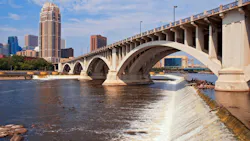
StormCon, the stormwater industry's annual conference, lands in Minneapolis Aug. 25-27, 2026, bringing engineers, municipal managers and erosion control specialists to a city shaped by water at every turn.
The Mississippi River cuts through downtown and more than a dozen lakes sit inside city limits. The city offers real-world examples in flooding response, water quality management and urban runoff control, making it a natural fit for the industry.
Spanning four watersheds, the city sits just upstream of the confluence of two major rivers, including the only gorge along the Mississippi River, Minneapolis Park and Recreation Board member Rachael Crabb told Stormwater Solutions.
“From the very beginning, Minneapolis grew around its waterways,” Crabb said. “When the city and park system were established, they permanently preserved many lakes, wetlands, floodplains, and riparian areas. Those early decisions continue to protect our natural resources and shape the city's relationship with water today.”
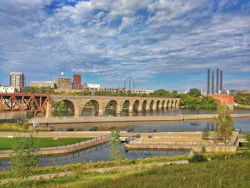
The entire state of Minnesota, as a community, is “proactive” in tackling storm water challenges, Andy Erickson, PhD, PE and research manager at St. Anthony Falls Laboratory, who is hosting one of StormCon 2026’s field trips at the University of Minnesota facility, told SWS in an interview.
The state’s stormwater community is “very interconnected, very robust, and very engaged,” Erickson said. "The stormwater professionals in Minneapolis and Minnesota in general are willing to try things, they're willing to experiment, they're willing to innovate, they're looking for innovations.”
"I get most of my research ideas from the stormwater practitioners and professionals,” he said. “I don't even have to come up with the ideas. I just have to find funding to be able to do the research to try to solve those problems.”
"The city of Minneapolis embodies both … the funding and the proactive nature of [the industry,]” Erickson said. “[It] is always looking for partners, always looking to engage, and always looking to collaborate … with partners at the state level, at the local level, at the nonprofit level, at the private level."
The city prioritizes both industry and community perspectives “to understand what their residents value,” he said, “and then use that to inform their stormwater decisions.”
It’s “always looking for opportunities to achieve multiple benefits,” Erickson added, such as “looking at every street reconstruction project they have and they're determining can we narrow the streets a little bit, still provide on-street parking, but use that additional space to implement green infrastructure or other stormwater controls without losing any of the other benefits.”
“Stormwater isn't just an infrastructure issue. It's personal,” Crabb said. “In Minneapolis, we drink surface water, swim in it, and understand our connections to our neighbors downstream.”
“A century ago, the Mississippi River in Minneapolis was so polluted it was considered essentially dead,” she said. “Today, it's healthy enough to support the reintroduction and long-term survival of native mussel populations. It’s a powerful example of what's possible through decades of intentional restoration and stewardship.”
For stormwater professionals looking to learn from a city that has spent a century investing in stormwater management and recovering the quality of the water it’s built around, StormCon 2026 offers a front-row seat. You can register for the conference, explore field trip details and preview the conference program at stormcon.com.
About the Author

Sarah Kominek
Head of Content, Stormwater Solutions
Sarah Kominek is the head of content for Stormwater Solutions at Endeavor Business Media, a division of EndeavorB2B. Kominek graduated from Wayne State University in with a Bachelor of Arts in Journalism and a minor in Communication with post-baccalaureate studies in biology. She has worked as a journalist for eight years covering the medical plastics industry and technology, plastics pollution and regulation, the automotive industry, public policy and community news.