Stormwater utility funding strategies that fight floods
- In part one of this series, we explored the trend of municipalities creating stormwater utilities, the value of enterprise funds, and why fee structure equity is important.
Even as communities are becoming more aware of devastating flooding that has resulted from uncontrolled runoff, stormwater infrastructure improvement isn't typically prioritized in municipal budgets. It is often the forgotten utility until the next flood. Projects identified in stormwater master plans and capital improvement projects may remain unconstructed and become outdated, despite studies that show $1 of stormwater mitigation spending can save from $6 to $13 in recovery expense.
One strategy for thousands of communities across the U.S. and Canada to provide greater flood resiliency is to establish a stormwater utility accompanied by a fee-for-service system, or enterprise fund. The Western Kentucky University Stormwater Utility Survey 2025 identified 2,147 stormwater utilities in the U.S. and 82 in Canada in 2025, an increase of more than 11% from their 2023 study.
In part one of this series, we provided key advantages of a stormwater utility and enterprise fund, examples of equitable rate structures, and types of stormwater utility projects funded by enterprise funds. This article will detail the importance of leveraging public support for stormwater utility funding through public information campaigns that communicate what customers are getting for their money, especially when the sun is shining and waters aren't rising.
Where is my money going?
Besides establishing a rate structure to collect enterprise funds, stormwater utilities must also have clearly communicated goals on how they will spend them. Each community's stormwater utility goals will be different. Supported by clear, proactive education and outreach campaigns for elected officials, special interest groups and customers, we've helped clients identify projects that create ripple effects across communities. We've also helped them advance broader economic, societal and environmental goals. And we've empowered decision-makers to choose legacy projects over least-cost alternatives.

Enterprise funds for a stormwater utility can accomplish a range of objectives:
- Functional storm sewer infrastructure. Years of neglect, largely driven by lack of funding, have left many communities vulnerable to repeated flooding caused by clogged or damaged inlets and pipes. Dedicated funding from stormwater utility fees has made it possible to service and restore the system, ensuring it operates as intended.
- Reduced runoff quantity. Many communities have experienced repeated flooding during heavy rain events and are implementing a stormwater utility with dedicated funding to reduce the frequency of those events.
- Improved runoff quality. HDR has worked with stormwater utilities that have goals to improve water quality and support recreational water features that are essential to the community's economy.
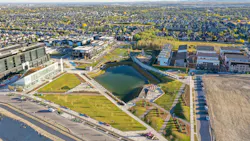
- Building green infrastructure. A recent project included stormwater mitigation features such as landscaped medians, increased park space, and pervious concrete for new basketball courts and other public assets. These features, accompanied by a stormwater detention pond, help to reduce flooding and enhance quality of life by revitalizing a historically underserved area with more park space.
- Regulatory compliance. Some of our clients have determined that creating a stormwater utility is the best way to comply with federal and state requirements. HDR has helped them develop plans to meet regulations, estimate the cost to comply, and determine a rate structure to generate necessary revenue.
- Capital improvement planning. In some communities, a lack of funding has meant that projects identified in municipal stormwater master plans and capital improvement plans weren't built and have become outdated. HDR has worked with clients to develop rates and financial policies to generate funds to construct large-scale projects necessary to respond to multiple stormwater concerns.
- Asset management for stormwater systems. Utility and enterprise revenue can be used to pay for commonly underfunded operations such as maintenance and repair, renewal programs, and to build up a local workforce.
- Enhanced customer assistance programs. A new fee or modified fee is the right time to reassess current customer conditions, affordability thresholds and related customer assistance programs.
Communicate and engage
Because public acceptance is key to successful rate adjustment, our comprehensive stormwater rate study for a municipal utility in California included robust customer outreach. Numerous touchpoints included virtual and in-person open houses and meetings with residents and the business community. The resulting study will be presented to the city's advisory committee, council water committee and city council later this year. The city expects our thorough analysis and transparent engagement with customers will enable sufficient funding for aging infrastructure and deferred capital improvements.
When to get started
Like planting trees, the best time to create a stormwater utility was 10 years ago. To get started, choose the right partner to help build an effective, equitable and legally durable stormwater utility. This partner can investigate feasibility by compiling information that decision-makers and the electorate need to make an informed decision that a stormwater utility with an enterprise fund is in the best interest of the community. The study should examine in detail what services, activities and projects the funds will be used for, the most fair and equitable method for allocating program costs to each customer, and how to collect fees.
Successful communities begin public education and outreach at the beginning of the feasibility study. A well-planned information campaign shares information across multiple channels to build a consensus of support from elected officials and beneficiaries to gain support from the entire community. Greater awareness of flood resiliency and clean water will help customers and public leaders remember the value of stormwater management even when it's not raining.
About the Author
Julie Stein
Julie Stein, ENV SP, LEED AP, is HDR’s Stormwater Director. Stein may be reached at [email protected]
Shawn Koorn
Shawn Koorn is a Utilities Rates Lead for HDR. Koorn may be reached at [email protected]
Aaditya Pise
Aaditya Pise, P.E., is a Water Resources Project Manager for HDR. Pise may be reached at [email protected]
Grady Reed
Grady Reed is a Utility Rates Business Analyst for HDR. Reed may be reached at G[email protected]