Texas invests millions in flood warning infrastructure as hearings expose monitoring gaps
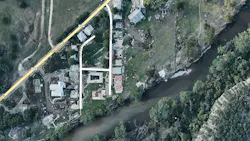
Texas legislative hearings April 27 and 28 documented critical gaps in the state's flood warning infrastructure following last year's Guadalupe River disaster that killed more than 130 people. Federal investigations confirm what failed, and Texas has since directed millions toward flood warning infrastructure, including a new real-time warning system for the Hill Country.
The joint House and Senate General Investigating Committees on the July 2025 Flooding Events convened April 27 and 28 in Austin. The sessions focused almost entirely on failures at Camp Mystic, where 25 campers, two counselors and the camp's executive director died.
On April 30, Camp Mystic informed the Texas Department of State Health Services it was withdrawing its application to operate this summer. The camp said in a statement that no administrative process or summer season should move forward while investigations continue and families grieve. Whether the camp will seek a license to operate in future years has not been determined.
The National Weather Service Austin/San Antonio issued a wireless emergency alert geo-fenced to western Kerr County, a Department of Commerce Office of Inspector General report, found. Most county officials lived outside that area and never received it.
The report also confirmed that the NWS Austin/San Antonio office's warning coordination meteorologist position had been vacant since spring 2025. The previous holder took an early retirement as part of federal workforce reductions. The role, which bridges forecasters and emergency managers, was not filled until November 2025. Two other positions were also vacated under what the OIG described as workforce optimization incentives.
"We need real-time monitoring of rainfall and river gauges, especially in upstream headwaters and watershed zones," Dub Thomas, Kerr County emergency management coordinator, told state legislators. "We cannot rely solely on radar or traditional forecasting from the National Weather Service."
Thomas' testimony aligned with findings in a StoryMap Collection produced by NWS San Angelo in coordination with the West Gulf River Forecast Center, the National Water Center, and the Weather Prediction Center. The documents confirmed that no stream gauge existed on the South Fork of the Guadalupe and no rainfall data was available west of Casa Bonita, the area where the heaviest rain fell.
After the flood, the Texas Legislature passed Senate Bill 5, which pulled $240 million from the state's rainy day fund for disaster response, according to the Texas Water Development Board. That included $50 million specifically for sirens and gauges in the 30 counties covered by the governor's July 2025 disaster declaration and $28 million for weather forecasting improvements. Senate Bill 3, signed by Gov. Greg Abbott on Sept. 5, 2025, directed the Texas Water Development Board to identify flood-prone areas within those counties and administer the siren grants.
The Texas governor's office awarded $4 million to the University of Texas at Arlington, with Rice University as a subawardee, to build a real-time flood warning system for the Hill Country, according to a Rice University news release. Nick Fang, director of UTA's Water Engineering Research Center, will lead the effort. The system will use radar-derived rainfall data fed into hydrologic and hydraulic models to forecast water depths at specific locations before conditions reach critical thresholds. A fully operational version of the warning system is expected by September 2027. Researchers are working to release an early dashboard version this summer.
Texas lawmakers separately allocated $24 million to Texas Tech University to expand the West Texas Mesonet, a network of more than 170 weather stations. Kerr County received its first outdoor flood warning sirens along the river last month, KERA News reported.
At the federal level, U.S. Sen. John Cornyn, R-Texas, introduced the Strengthening Infrastructure, Readiness, and Emergency Notifications (SIREN) Act in February 2026, which would allow states to redirect unused Broadband Equity, Access, and Deployment (BEAD) Program funding toward warning sirens, flood sensors, and mass notification technologies. The bill has not passed.
The joint committee has not announced a date for a second hearing. Whether future sessions will examine the storm, the federal warning system, or the funding pipeline failures that left Kerr County without gauges and sirens on the night of July 4 has not been determined.
About the Author

Sarah Kominek
Head of Content, Stormwater Solutions
Sarah Kominek is the head of content for Stormwater Solutions at Endeavor Business Media, a division of EndeavorB2B. Kominek graduated from Wayne State University in with a Bachelor of Arts in Journalism and a minor in Communication with post-baccalaureate studies in biology. She has worked as a journalist for eight years covering the medical plastics industry and technology, plastics pollution and regulation, the automotive industry, public policy and community news.