Traverse City, Mich. says infrastructure investments averted major environmental incident during record April flooding
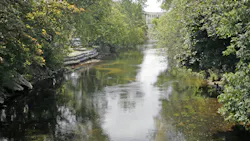
Infrastructure investments completed since 2021 prevented an estimated 1.5 million gallons per day of raw sewage from discharging into northern Michigan's Boardman River and Grand Traverse Bay when rapid snowmelt and heavy rain drove the river to its highest level in 77 years in April.
River flows near Brown Bridge Road in Travese City reached 1,120 cubic feet per second on April 14, exceeding the previous record by 92 percent, according to U.S. Geological Survey data cited in a city news release. At FishPass, a fish barrier and passage system on Boardman River, water levels came within half an inch of the 500-year flood.
The storm opened a sinkhole near the Boardman River that exposed an old 24-inch sewer trunkline with a compromised six-inch hole in a service connection, the city said. Because the city had relocated and replaced the line with a new 30-inch main in 2023, no sewage discharged.
"Investing in our infrastructure does matter," Art Krueger, the city's director of municipal utilities, said at a June 8 city commission study session, according to a report by WCMU. "It protects public health and safety and welfare of people, our residents, and our visitors."
Erosion near FishPass, the $23.2 million dam replacement project completed in phases in 2025 and 2026, prompted concern among residents that the structure had failed. Mayor Amy Shamroe said it had not. "It's just a lot of water," she said.