Why duckbill check valves are gaining ground in stormwater outfall design
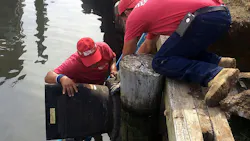
For water utilities and municipal authorities, stormwater management is a growing challenge. Changing weather patterns are prompting more intense precipitation events, increasing the volume of snowmelt and rainwater entering water management systems. At the same time, increasing urbanization is reducing the environment's capacity to absorb surface runoff.
Impervious surfaces such as rooftops, parking lots and roadways now cover a significant portion of many urban areas, preventing rainwater from soaking into the ground. Instead, precipitation runs off in large volumes into storm drains, sewer systems and drainage ditches, many of which were designed and built decades ago for a different hydrological reality.
In cities that rely on combined sewer systems, where stormwater and sewage share the same network, an intense rain event can push raw or partially treated sewage back through combined sewage outfalls into waterways or into streets and basements. The resulting contamination introduces bacterial and viral pathogens into the environment, threatening public health and the ecological integrity of natural waterways.
Standing water, which can persist long after a flood event recedes, compounds the problem. The World Health Organization has identified it as a significant public health hazard, noting that standing water is a prime breeding ground for mosquitoes that can carry malaria, dengue fever, yellow fever and viral encephalitis. According to a joint EPA and CDC statement on mosquito control, the WHO estimates that more than 300 million clinical cases globally each year are attributable to mosquito-borne illnesses.
The role of check valves
Within any stormwater or wastewater system, check valves perform a critical function. These passive, non-powered devices allow fluid to flow in one direction while automatically closing to prevent reverse flow. They rely on flow velocity or differential pressure to operate, requiring no manual activation, electronic control or external power source.
When functioning correctly, check valves prevent discharges from treatment plants and outfalls from reversing into clean water supplies and block sanitary sewer overflows. They also protect residential and commercial areas from the backflow of methane and hydrogen sulfide gases from wet wells and sewer systems, and guard pipeline infrastructure against water hammer, a pressure surge caused by a sudden change in flow velocity.
Not all check valves are equally suited to stormwater environments. Conventional designs, including swing, flap, ball and disc check valves, incorporate mechanical components vulnerable to corrosion, erosion and debris accumulation. A swing valve's disc rotates on a trunnion that can wear; a ball valve's gate may fail to seat properly after exposure to abrasive slurries; flap valves can seize open when solids are present.
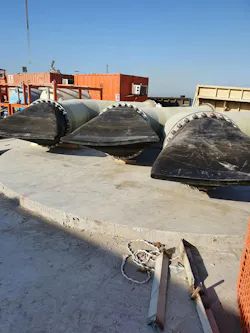
How duckbill valves differ
The duckbill check valve uses a one-piece flexible sleeve of elastomeric rubber shaped like a duck's beak. Positive differential pressure opens the sleeve, allowing flow. When that pressure differential reverses, the sleeve lips clamp shut, sealing against backflow. There are no moving mechanical parts, no pivot points, no springs and no metal components that can corrode or wear.
Flows in stormwater outfalls and combined sewer systems are often laden with sand, grit and suspended solids that would quickly degrade a mechanical valve. The flexible elastomer can compress tightly around trapped solids, ensuring a seal under demanding conditions. The material also resists organic fouling such as algae and barnacles, which are common problems in marine and tidal outfall environments.
Properly specified elastomers offer broad chemical resistance. Duckbill valves can be constructed from materials that comply with ANSI/NSF-61 standards, making them suitable where contact with potable water is a concern. Operating temperature ranges of minus 65 degrees to plus 250 degrees Fahrenheit cover virtually any climate or process condition. Unlike swing or flap valves, duckbill valves do not generate loud closure noise, which is a consideration when outfalls are located near residential areas.
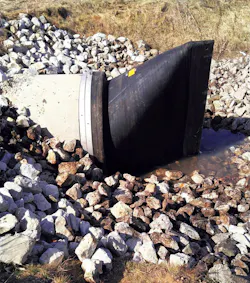
Drainage and debris
Some duckbill valve designs feature a sloping bottom that allows complete drainage of the valve body after flow stops. These valves are engineered to open at as little as 1 to 2 inches of head pressure, ensuring that minimal flows can drain fully rather than collect behind the valve seat. The sloping design also allows solids such as rags, grit or debris to pass through rather than settle.
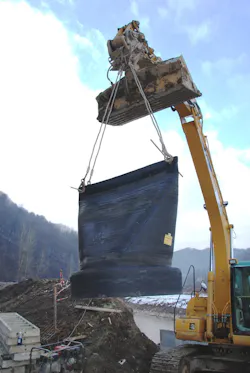
Post-Sandy retrofit
When Hurricane Sandy struck Long Branch, N.J., storm surge inundated the area and floodwaters re-entered the urban drainage network through reverse flow in the outfall system. In the aftermath, the city retrofitted rubber duckbill check valves at its outfall points, according to a Proco Products case study, which states the valves met FEMA specifications. The upgrade produced a drainage system more resilient to flow-reversal events during major storm surges.
Duckbill and inline check valves are now in service at stormwater outfalls, CSO structures and sewer systems across North America in configurations ranging from 1-inch residential drainage pipes to 108-inch large-bore outfall structures.
Lifecycle and maintenance
Conventional mechanical check valves typically have a service life of five to 10 years before corrosion, wear and debris accumulation require major maintenance or replacement. The all-elastomeric construction of a duckbill valve, with no metal components to rust and no mechanical parts to wear, carries a life expectancy of 35 to 50 years under normal operating conditions.
Swing and flap valves require periodic inspection, cleaning and mechanical servicing, whereas duckbill valves require no scheduled maintenance, an advantage for outfall structures that are physically difficult to access or require confined-space entry.
Looking ahead
As climate projections indicate more frequent extreme precipitation events, the performance gap between adequate and inadequate stormwater infrastructure will grow more consequential. Cities and utilities that have deferred investment in drainage upgrades or rely on aging flap gates and swing check valves face growing exposure to the costs of flooding, contamination and public health impacts.
Green infrastructure, permeable pavements, retention ponds and upgraded sewer capacity all have roles to play in a comprehensive stormwater strategy. But at every outfall, every CSO structure and every sewer manhole, the choice of check valve matters. When the time comes to replace aging flap gates or swing gate check valves in outfalls, don't simply re-order the same valve that has always been used; consider all your options. In many cases, rubber duckbill check valves are an engineering upgrade, more affordable, and easier to install.