Read the water: Inspecting stormwater systems after major rainfall
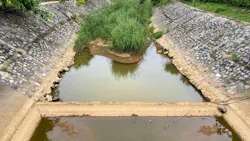
Stormwater infrastructure is often easiest to evaluate when it is being asked to perform. During dry weather, a retention pond may look perfectly functional. A drainage swale may appear stable. Catch basins may be clear at the surface, and an outfall may show no obvious signs of distress. Then several inches of rain arrive in a short period of time, and suddenly the system begins telling a very different story. Water ponds where it should not. An inlet struggles to keep up. A drainage channel begins carrying water at an unexpectedly high velocity. Sediment appears at the mouth of a pipe. A pond bank that looked stable a week earlier develops a small washout. Riprap shifts. Water remains elevated long after rainfall ends.
These observations should not simply be dismissed as the consequences of a heavy storm. A significant rainfall event is one of the best real-world stress tests a stormwater system will ever receive. For municipalities, homeowners associations, commercial properties, golf courses and other communities responsible for stormwater infrastructure, the period immediately following a major storm presents an opportunity to understand how the system is actually performing and identify problems before they become expensive failures.
Start with the water
One of the simplest questions to ask after a storm is: Where did the water go? Stormwater systems are designed around a sequence of collection, conveyance, storage, treatment and discharge. When one component is restricted or compromised, the symptoms often appear somewhere else. Standing water near a roadway, for example, does not necessarily mean the nearest catch basin is the problem. The inlet may be functioning properly while a downstream pipe is partially obstructed. A pond may remain unusually high because its outlet structure is restricted. An eroding ditch may actually be receiving more concentrated flow because of changes farther upstream.
This is why post-storm observations are so valuable. Water effectively traces the drainage system for us. Areas of unexpected ponding, concentrated flow, sediment deposition, erosion and prolonged saturation provide clues about where additional investigation may be warranted. Rather than immediately treating the visible symptom, stormwater professionals should follow the water and determine why that condition developed.
How quickly did the pond recover?
Stormwater ponds are among the most visible components of a community's drainage infrastructure, yet their performance is often judged almost entirely by appearance. After significant rainfall, pay attention to how the pond behaves. How high did the water rise? Did it reach areas that normally remain dry? How long did the elevated water level remain? Did the pond gradually return to its expected elevation?
A pond remaining elevated longer than expected can indicate several possible concerns, including restricted outlet structures, blocked pipes, downstream limitations, excessive sediment accumulation or changes within the contributing drainage area. Sediment is particularly important because its effects occur gradually. Every cubic yard of material accumulating within a pond occupies space that was previously available for water. Over years of operation, sediment can alter depths, reduce storage volume, restrict forebays, affect outlet structures and change how water moves through the system.
The pond may still hold water and look attractive while its functional capacity is slowly declining. That is why bathymetric surveys, sediment measurements and routine inspections can be valuable components of long-term stormwater planning.
Inspect the inlets
Inlets provide another excellent indicator of system performance. After heavy rainfall, inspect the areas immediately surrounding catch basins, curb inlets, pipes and other collection structures. Look for debris accumulation, sediment deposits, erosion, displaced soil and high-water marks. Sediment patterns are particularly useful because they can reveal how water approached a structure during the storm.
A fan of sediment upstream of an inlet may indicate reduced velocities and deposition. Erosion immediately adjacent to a pipe may suggest concentrated flow. Debris caught above the normal waterline can provide evidence of how high water reached during the event. Repeated ponding around the same inlet should also be documented. Cleaning the structure may be necessary, but recurring problems deserve further investigation. The restriction could exist farther downstream, or the contributing drainage area may be delivering more runoff than anticipated. The goal should be to understand the system, not simply reset it until the next storm.
Outfalls tell a story
Some of the most important post-storm observations occur at outfalls. Water leaving a pipe carries energy. If that energy is not properly dissipated, the result can be scour, erosion, undermining, bank instability and eventually structural damage.
After a major rainfall event, inspect outfalls for newly exposed soil, displaced riprap, undercut pipe ends, erosion channels, settlement and changes in downstream vegetation. Small areas of scour deserve attention.
Erosion rarely begins as a dramatic failure. It often starts with several inches of soil loss around a structure. Another storm removes a little more. Eventually the supporting material around the pipe or headwall is compromised. By the time the failure becomes impossible to ignore, the repair may involve excavation, structural work, significant stone placement, stabilization and restoration. Earlier intervention might have required only grading, additional energy dissipation, vegetation or relatively minor stabilization. That difference is the foundation of preventative stormwater maintenance.
Watch the banks
Pond and channel banks should also be inspected closely after major rainfall. Look for bare soil, undercutting, sloughing, newly formed channels, exposed roots, sediment movement and areas where turf or vegetation has been damaged.
One condition I continually see is erosion concentrated directly at the normal waterline of stormwater ponds. Wave action, fluctuating water levels, steep slopes, poor vegetation establishment and runoff traveling down the bank can gradually remove soil from this area. The turf above may remain healthy, creating the appearance of a stable shoreline while the soil beneath it is slowly being lost.
Successful stabilization requires identifying the mechanism causing the erosion. Depending on site conditions, solutions may include regrading, native vegetation, erosion-control fabrics, coir products, stone armoring, soil reinforcement or combinations of these methods. Simply placing material over an erosion problem without understanding why the erosion is occurring rarely provides the best long-term solution.
Vegetation is infrastructure
Vegetation within stormwater systems should not be viewed only as landscaping. Properly selected and established vegetation can stabilize soil, slow runoff, protect banks, filter sediment, improve infiltration and dissipate flow velocity. This becomes especially apparent after major storms. Dense, established vegetation often remains intact while adjacent bare or poorly stabilized areas experience significant soil movement. For steep drainage corridors and pond banks, strategic plantings can complement structural stabilization while improving resilience.
Plant selection, spacing, root characteristics, expected water levels, sunlight, slope, maintenance requirements and hydraulic conditions all matter. The goal is not simply to make a stormwater facility look natural. The vegetation should contribute to the function of the system.
Photograph everything
One of the easiest improvements any stormwater owner can make costs almost nothing: document what happens during and immediately after storms.
Photograph high-water marks, pond levels, erosion, sediment deposits, overflowing structures, standing water, damaged vegetation and unusual flow patterns. Whenever possible, take photographs from consistent locations over time. A single photograph may document a problem. A series of photographs taken after multiple storms can reveal a trend. That documentation can become extremely valuable when developing maintenance plans, discussing conditions with engineers and contractors, preparing budgets, comparing repair proposals or explaining capital improvements to boards and residents.
Build a baseline before you need one
Communities shouldn’t wait for a major failure before developing an inventory of their stormwater infrastructure. A comprehensive stormwater assessment can establish baseline conditions for ponds, pipes, outfalls, catch basins, swales, drainage channels, control structures and other best management practices. From there, deficiencies can be prioritized. Some items may require immediate repair. Others may simply need monitoring. Certain assets may benefit from routine preventative maintenance, while larger projects can be incorporated into future capital planning. This approach allows property owners and municipalities to move away from reactive maintenance.
The warning usually comes before the failure
Stormwater infrastructure rarely fails without warning. The warning may be subtle. It may be a small erosion channel that was not there last month. A pond that takes longer to recover. A recurring sediment deposit. A section of exposed pipe. A catch basin that repeatedly backs up. A shoreline beginning to undercut.
Individually, these conditions may not seem urgent. Collectively, they tell the story of how the system is aging and where future problems are developing. Major rainfall events give us an opportunity to read that story. The communities that use those observations to guide inspections, preventative maintenance and capital planning are far better positioned than those that wait for something to fail.
The next time several inches of rain fall on your property, do not just wait for the water to disappear. Walk the system. Look at the ponds. Check the inlets. Follow the channels. Inspect the outfalls. Photograph what changed. Because when stormwater infrastructure is under stress. It’s often telling you exactly where the next problem will be. You just have to know how to read the water.
About the Author
Joseph Garavelli
Joseph Garavelli is the founder and senior environmental consultant at EcoTactics, specializing in erosion control, stormwater systems, and water quality solutions throughout South Carolina. He also provides consulting support for Ecological Improvements on environmental and infrastructure-related projects.