Connecticut officials say decades-old drainage systems failed to keep up with September rain bomb
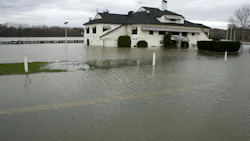
A storm that dropped 3 to 5 inches of rain on southern Fairfield County, Connecticut, in a matter of hours on Sept. 13 overwhelmed the state's stormwater drainage systems, closing dozens of roads and bridges and damaging at least one bridge structure.
The National Weather Service's Upton, New York, office warned at the time of "life threatening flash flooding" of creeks, streams and underpasses.
Gov. Ned Lamont called the storm a "rain bomb," according to WTNH. "It's how sudden the intense rainfall is, five, seven, nine inches in a very limited period of time, and that's what caused severe flooding that overwhelms our stormwater drainage systems," Lamont said.
Laoise King, deputy commissioner of the Connecticut Department of Transportation, said the state's stormwater infrastructure, much of it built decades ago, could not handle the rainfall, and dozens of roads and bridges were temporarily closed, including Route 1, a stretch of Interstate 95 in Greenwich and the Merritt Parkway between Westport and Fairfield, according to Connecticut Public.
In Westport, a concrete and stone seawall beneath a bridge on Jesup Road shifted several feet as floodwater rushed through Deadman Brook, according to the Connecticut Mirror. Marcel Bolduc, owner of the contracting company assessing the damage, said the repair would not be simple.
"Climate-induced extreme rainfall is increasing, even without a comparable increase in annual rainfall,” Emma Cimino, acting commissioner of the Connecticut Department of Energy and Environmental Protection, said at a press briefing Monday at the state Capitol in Hartford. “And as we've heard, as we've seen, when intense rain falls quickly, local drainage systems, roads, streams and other infrastructure can be overwhelmed. We need to invest in resilience. We need to invest in our infrastructure. We also need to ensure that we're doing what we can to prevent the worst impacts of climate change.”
State Emergency Management Director Bill Turner said the threshold to qualify for federal public disaster assistance is about $5 million in Fairfield County and $7 million statewide, and officials were surveying coastal communities to make sure no damage was missed, according to the Connecticut Mirror. King said no permanent damage had been reported to any state roads.
Gary Lessor, a meteorologist at Western Connecticut State University, said 200-year rainfall events, with a 0.5 percent annual chance of occurring, are happening more frequently than that probability would suggest, the Connecticut Mirror reported.
As of Wednesday, no state or federal disaster declaration had been issued for the storm, and officials said they were still collecting data to determine whether damages would meet the threshold to pursue one, according to WTNH.