Presentation Focuses on Enhanced Biological Nutrient Removal
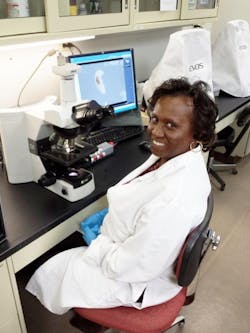
In February, Toni Glymph-Martin, senior environmental microbiologist with the Metropolitan Water Reclamation District of Greater Chicago (MWRD), presented microbiological methods for monitoring enhanced biological nutrient removal (EBNR) during the Midwest Water Analysts Assn. Winter Expo in Kenosha, Wis.
Nationwide, biological nutrient removal is becoming more prevalent in the wastewater industry as the focus shifts to a resource recovery model. Removing nutrients during wastewater treatment processes benefits the waterways as an overabundance can result in low dissolved oxygen, fish kills, murky water, depletion of flora and fauna, and dead zones in the Gulf of Mexico. MWRD has adopted a nutrient removal and resource recovery approach with respect to phosphorus removal. The plan includes recovery of phosphorus in the form of a slow release mineral fertilizer material to the extent that this nutrient becomes available in recycle streams following anaerobic digestion of sludge.
The Environmental Monitoring and Research Div. team is studying the enrichment of naturally occurring microorganisms at the Stickney and Calumet Water Reclamation Plants. A multi-year EBNR study is underway, the goal of which is to reduce the level of phosphorus in the MWRD's treated water that is released to the Chicago area waterways.
"EBNR is a microbiological system," Glymph said. "Monitoring the health and abundance of the phosphorus accumulating microorganisms primarily responsible for EBNR can be a valuable tool for controlling the activated wastewater treatment process."
Source: MWRD