Long-term erosion prevention: Innovative soil stabilization strategies for resilient, weather-ready sites
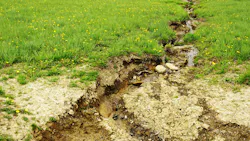
Soil stabilization is a key component of long-term erosion prevention, especially as extreme weather, site disturbance and regulatory pressures continue to escalate. Surface water and erosion control professionals are expected to deliver solutions that prevent sediment migration and improve the soil's inherent structure and performance.
In many settings, traditional approaches — basic compaction, riprap placement and aggregate mixing — no longer provide the reliability that modern projects demand.
Today's stabilization strategies need to strengthen the soil matrix and manage moisture movement, while reducing erosion potential and supporting sustainable, environmentally responsible outcomes. Accomplishing all of this requires a combination of new materials, natural reinforcement, engineered products and advanced testing methods.
The following innovative technologies and integrated approaches are shaping the next generation of soil stabilization and long-term erosion control.
Key drivers behind modern soil stabilization advances
The conditions that cause soil failure are changing, prompting modern stabilization practices to evolve. Higher rainfall intensity, fluctuating groundwater conditions, rapid land disturbance and shifting soil profiles have all increased the complexity of erosion control. Professionals are now seeking methods that offer greater resilience and durability combined with consistent performance.
Key drivers include:
- High-intensity and more frequent storms increasing sediment transport risks
- Growing need to stabilize challenging soils, such as expansive clays and fine silts
- Stricter environmental requirements around sediment discharge and water quality
- Increased preference for sustainable materials and low-carbon approaches
- Expanded use of data modeling to predict erosion patterns and stabilization needs
These factors have accelerated the adoption of engineered solutions designed to outperform traditional stand-alone methods.
Engineered soil amendments for structural improvement
Engineered soil amendments play an increasingly central role in modern stabilization, improving soil behavior at a fundamental level. Rather than relying solely on mechanical compaction, these amendments modify soil characteristics to create stronger and more moisture-tolerant conditions.
Mineral additives provide measurable improvements in plasticity and moisture response. They help bind fine-grained soils and reduce swelling potential while creating a more predictable engineering material. When incorporated correctly, they increase shear strength and reduce deformation under both wet and dry conditions, providing stability needed for areas exposed to frequent runoff or freeze-thaw cycles.
Organic amendments support soil structure and create a more favorable environment for vegetation. They improve porosity and increase water retention while promoting natural aggregation. On slopes and disturbed areas, organic enhancements contribute to long-term stabilization, promoting root growth and improving infiltration to slow surface runoff.
Together, these amendments provide consistency that is crucial for project reliability. They reduce variability across the site and improve compatibility with geosynthetics, vegetation and polymer systems, and many can be mixed on site, reducing hauling demands.
Polymer technologies for high-strength, low-disruption stabilization
Polymer-based solutions have expanded rapidly due to their precision and performance consistency. These versatile formulations strengthen soil through chemical bonding rather than mechanical rearrangement, allowing them to stabilize surfaces and subsurfaces without extensive excavation or structural alteration.
Surface polymer treatments form a protective shield that resists wind erosion, rainfall impact and sheet flow. They're highly effective during construction, as they can be applied quickly and withstand ongoing site activity, and are widely used on slopes, haul roads, disturbed work zones and areas requiring temporary but reliable protection.
For deeper stabilization, polymers penetrate the soil profile and fuse particles into a flexible yet strong matrix, improving shear strength and reducing permeability while minimizing long-term settlement. This approach is especially valuable for subgrades with high moisture content or soils with poor natural structure.
Polymers typically require smaller application volumes and produce long-term stabilization without the brittleness associated with cement-based additives. They reduce dust generation and support environmental compliance while performing well in a wide temperature range, making them suitable for both permanent and temporary applications.
Bioengineering techniques for natural reinforcement
Bioengineering offers a powerful blend of structural stabilization and natural ecosystem function. These methods leverage plant systems and organic structures to reinforce the soil long after installation, making them highly effective for slopes, streambanks, restoration sites and similar terrain.
Deep-rooting vegetation creates a living anchor that stabilizes soil layers, binding particles and reinforcing the soil profile while increasing resistance to shear. Vegetation also reduces surface erosion by intercepting rainfall and slowing runoff. Selecting the proper species ensures long-term success, making soil type, climate and hydrologic conditions key considerations.
Fiber rolls, live stakes and brush layers provide immediate erosion control and facilitate root development. Fiber rolls trap sediment and slow water movement, making them ideal for slopes or water edges, while live stakes and brush layers grow into dense, interwoven root structures that strengthen banks and enhance stability over time.
Bioengineering systems improve soil structure while enhancing habitat and supporting ecological restoration goals. They offer long-term durability and integrate seamlessly with engineered stabilization products, providing a strong option for environmentally sensitive areas.
Geosynthetics and reinforcement materials
Geosynthetics are a foundational part of erosion control and stabilization, and advancements in manufacturing have increased their performance and service life. These materials reinforce soil and manage water flow while creating separation layers needed for long-term stability.
Geogrids provide structural reinforcement, interlocking with surrounding soil and distributing loads more evenly. They're ideal for weak subgrades and road bases, especially in areas where high traffic or heavy loads would otherwise cause rutting or settlement.
Modern erosion control mats and blankets offer improved strength and durability combined with better compatibility with vegetation. They protect against rainfall impact, surface erosion and soil displacement, and many are engineered specifically for steep or highly erosive slopes. Geomembranes offer controlled impermeability, while geotextiles provide filtration, separation and reinforcement. When integrated with other stabilization techniques, both enhance water management and prevent mixing of soil layers.
Hybrid stabilization systems for maximum durability
The most effective stabilization strategies often combine multiple techniques. Hybrid systems allow professionals to draw on the strengths of both engineered materials and natural systems, creating multi-layered stabilization.
Common hybrid applications include:
- Pairing engineered amendments with polymer binders for deeper, moisture-resistant structural improvement
- Installing bioengineering systems over geotextiles or mats to provide both immediate and long-term reinforcement
- Using geogrids with amendment-enhanced soils to improve load-bearing capacity
- Adding surface polymer treatments after vegetation installation to shield the soil during establishment and early rainfall events
Hybrid methods create balanced stabilization solutions capable of supporting heavy use and resisting erosion while adapting to site changes over time.
Selecting the right strategy through site-specific evaluation
Long-term stabilization success depends on understanding site-specific conditions. Soil composition, slope geometry, hydrology, freeze-thaw cycles, traffic loads and vegetation potential all influence which methods will perform best.
Modern testing and modeling tools, such as moisture analysis and digital hydrologic modeling, allow professionals to evaluate performance before field installation. Site-specific design minimizes failure and reduces rework while ensuring compliance with environmental requirements. As stabilization methods become more advanced, integrating data-driven assessment becomes essential for predictable, long-term results.
Building long-term stability through integrated, modern solutions
Long-term erosion control requires more than traditional practices. The innovative tools available today — engineered soil amendments, polymer technologies, bioengineering systems, geosynthetics and hybrid designs — provide more resilient and environmentally compatible soil stabilization.
Applying these methods strategically and grounding each project in thorough site assessment allows erosion control professionals to build land surfaces capable of withstanding intense weather and ongoing operational demands. These integrated strategies represent the future of soil stabilization and are essential for meeting project durability goals while protecting natural resources for the long term.
About the Author
Mike Cohn
Mike Cohn is Vice President at Rock Solid Stabilization & Reclamation, Inc., a leader in sustainable reconstruction specializing in soil modification and pavement preservation. With over 25 years of experience in the stabilization industry, Mike is recognized as a thought leader focused on advancing best practices and promoting sustainability. He drives operational excellence while leveraging digital content and social media to educate the market and strengthen partnerships with clients and vendors.