Phase One of Calif.'s First Sustainable Utility Campus Complete
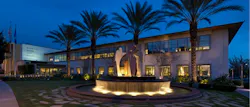
Burbank Water and Power (BWP) and AHBE Landscape Architects (AHBE) hosted a community fair and dedication ceremony to celebrate the completion of the first phase of their collaborative efforts to transform BWP’s main campus from an industrial relic into a sustainable model for the rest of the nation. The event gave the community a rare chance to peek behind the scenes of this utility campus that is otherwise closed to the public.
“BWP has served this community for almost 100 years,” explained Ron Davis, BWP general manager. “We owe it to our customers to ensure that we continue to do so into the foreseeable future, which means we should seek long-term solutions to the problems that our industry faces. Most notably, how do we generate the water and power that our customers need with the least impact on our environment?”
When BWP built an award-winning electric power plant in 2005, it also replaced several existing substations located on the campus. In restoring the old substation sites, BWP saw an opportunity to achieve something greater. Los Angeles-based landscape architecture firm AHBE Landscape Architects was commissioned to create an ambitious master plan for an EcoCampus that focused on transforming the grounds from an aging industrial site into a regenerative green space.
Three of California’s 50 LEED Platinum Buildings are located on the BWP campus, including California’s first LEED Platinum designed warehouse. The main administration building was renovated to its original Art Deco splendor while upgrading its systems and structure to also achieve a LEED Platinum rating. Construction on the third building starts this month. The Electrical Equipment Building will be completed in March 2013. Architecture firms Leo A. Daly and Tyler/Gonzalez played a key role in making this achievement possible.
BWP’s EcoCampus is the only industrial project out of 150 national and international projects to be included in the Sustainable Sites Initiative (SITES) pilot program. Similar to the LEED rating system for buildings, SITES is the first step toward creating a rating system that would evaluate the efficiency the landscape that ties our urban environments together.
The Administration Building boasts three rooftop gardens that reduce the heat island effect, help channel and filter storm water and reduce the building’s air conditioning requirements.
The campus features five different types of water filtration technologies including infiltration, flow-through, detention, tree root cells and rainwater capture. The project also features one of the longer Green Streets in Southern California. The landscape running across three contiguous city streets acts as a filter before runoff enters the storm water system.
By California law, all projects are required to mitigate at least the first 0.75 in. of rainfall. Thanks to the innovative technologies that AHBE has integrated into the design, the BWP EcoCampus already mitigates the first inch. Ultimately, the master plan would see the campus become a zero runoff site, far exceeding what state law requires.
An architectural solar array pays homage to both the Art Deco heritage of the building and the city’s historical ties to aviation. It will also power the LEED Platinum service center and warehouse building, as it channels rainwater to a filtration system.
All of the landscape serves a dual purpose. Aesthetically, it provides green space for employees and the public. Functionally, there are water filtration systems hidden below ground, allowing the entire campus to serve as a water filtration system.
“Landscape has a key role to play in the regeneration of our cities,” said Calvin Abe, FASLA, president, of AHBE. “Beyond the aesthetics, it can proactively counteract many of the problems that we face in urban environments. BWP’s EcoCampus stands as an exciting and restorative example of what can be accomplished when there is a long-term vision.”
Source: BWP/AHBE