Minnesota completes major St. Louis River sediment cleanup milestone
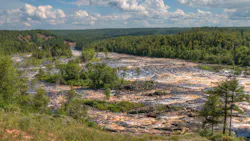
Federal, state and Tribal partners have completed all contaminated sediment cleanup projects on the Minnesota side of the St. Louis River Area of Concern, marking a significant milestone in one of the nation’s largest Great Lakes restoration efforts.
Officials gathered at Thomson Reservoir in Carlton, Minnesota, to celebrate the completion of the final Minnesota sediment remediation project, a $30.5 million effort that addressed roughly 225,000 cubic yards of contaminated sediment trapped in the reservoir. The work is part of a decades-long campaign to restore water quality and ecological health in the heavily industrialized watershed that drains into Lake Superior.
According to EPA, restoration partners have now addressed more than 1.9 million cubic yards of contaminated sediment across the St. Louis River Area of Concern, which was designated in 1987 under the Great Lakes Water Quality Agreement. Historical industrial activity left behind pollutants including mercury, PCBs, PAHs and dioxins that impaired aquatic habitat, water quality and recreation. In addition to sediment remediation, project teams have completed 17 habitat restoration projects covering more than 1,000 acres and seeded more than 80,000 pounds of wild rice throughout the watershed.
EPA said the cleanup and restoration work has been supported by approximately $250 million in Great Lakes Restoration Initiative funding, leveraging an additional $208 million from state, local and industry partners. Officials noted that the work is intended not only to improve environmental conditions, but also to strengthen long-term watershed resilience, restore fish and wildlife habitat and reconnect communities to the river corridor. Four of the nine beneficial use impairments originally assigned to the St. Louis River Area of Concern have now been removed, moving the watershed closer to eventual delisting.