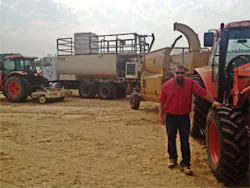
Erosion and sediment control services are very similar to insurance policies, says Brad Cline, who with his wife Suzanne owns Cline Environmental in Bono, AR. Cline points out that no one is particularly thrilled to see an insurance salesperson. “The greatest challenge for my position is educating the construction industry that this trade is as essential as plumbers and electricians,” he says. It certainly is when there are regulations and fines involved for not taking such services seriously. Cline endeavors to provide his clients with “insurance” by offering turnkey stormwater pollution prevention plan (SWPPP) design and implementation. “Our company consists of engineers, inspectors, and field crews. Our engineering background gives us an edge by understanding hydrology and the power of water,” Cline points out. “Erosion and sediment control requires both planning before installation of BMPs and response after the storm. We try to fix the problem, not just the silt fence. We have a large fleet of equipment and skilled crews to not only get the job done but to get it done fast.” Since the company’s inception in 2008, Cline Environmental has amassed a significant list of clients across the board: oil and gas companies, general contractors, transportation department contractors, utility contractors, mining companies, municipal and county road departments, farmers, land development companies, large home developers, and landscapers.
What he does day to day
Cline spends his days managing field crews as well as cash flow. He spends time doing SWPPP designs and site inspections and marketing the company in an effort to attract more business. “Most of all, I spend my time educating clients about the potential liabilities and ways to prevent them,” he says. While tending to the business of the day, Cline also is looking ahead on an ongoing basis. “I have to constantly be looking into the future for upcoming regulations, projects, educational efforts, and tools to get the job done.”
What led him into this line of work
After attending college, Cline went to work in the solid waste industry. “The experience opened my eyes to the way regulations affect and create industry,” he says. After moving back to his home town, he went to work for a land design group. Among his many tasks, preparation of SWPPP documentation and permits were on his priority list. “During site visits, we noticed that neither developers nor site contractors were performing SWPPP inspections,” Cline says. He saw that as an opportunity to provide that service for residential and commercial construction and started a side business. “Contractors were not set up to install or maintain erosion or sediment control best management practices,” says Cline. “We built a custom silt fence plow and used the income generated by it to buy straw blowers and hydroseeding equipment. Now we have a large fleet of the best tools available to the industry and a crew that can satisfy not only our clients but the local and state regulators as well.”
What he likes best about his job
“The team that I work with is the best part of my job,” says Cline. “By myself, I cannot install 10,000 feet of silt fence, seed and mulch 10 acres, or Curlex 12,000 square yards of slope in a day, but each of my crews has.” He also appreciates the team he has in the office. “Peer review, permitting, inspection, and bookkeeping takes a good team to be successful,” says Cline, adding that his employees are always engaged in continuing education. “I enjoy what I do and the people I work for and with.”
His greatest challenge
Selling the idea that there is value and cost for the services his company provides is Cline’s biggest challenge. “Often, a lot of work is performed and at the end of the job the green grass is all that is left,” he points out. “All of the work that went into temporary controls, inspection services, and permitting has been completed, and the owner has no physical asset for the money he has invested-similar to insurance. As with an insurance policy, the owner is protected throughout the project against his contractors contributing to pollution problems or facing fines from state and local regulators.”