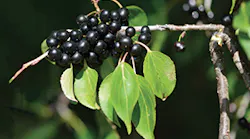
If you deal with vegetation management issues or plant groundcover for erosion control, chances are you’ve had at least one encounter with the dreaded knotweed. It spreads quickly and can drive out many other plants, but it has a shallow root system and therefore does little to anchor the soil. And it’s darned near impossible to kill.
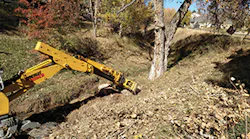
An article in Stormwater a couple of years ago included a sidebar all about Japanese knotweed (scroll to the bottom). Among other things, it reported that in the UK, people who allow knotweed to grow and spread from their property can be fined under the country’s antisocial behavior laws. There, as in the US, an invasion of knotweed can lower property values and undermine the foundations of buildings. It has spawned dozens of schemes for removing it—most of them, unfortunately, unsuccessful. These include physically removing it (it grows back rapidly unless you get every bit of root), spraying with herbicide (which kills surrounding plants as well), and injecting herbicide with a hypodermic needle into the individual stems.
How easily does knotweed spread? As this article explains, in 1850 a Dutch doctor shipped some knotweed from Nagasaki to the Netherlands and from there sent a specimen to England. The plant was prized at the time as an attractive ornamental, and it was also believed to help anchor the soil and to provide feed for cattle. Although the plant that arrived in 1850 was female, and there were no seeds sent to England at all, knotweed grows so readily from even a small piece of root that it soon spread throughout the country. Genetic testing in 2000 showed that the DNA from samples throughout the UK is identical; all the knotweed in the country seems to have grown from that single plant.
In the US, it has spread throughout the Northeast, the Great Lakes Region, the Pacific Northwest, and elsewhere. (The hypodermic method of killing it was attempted in Oregon, where a two-person crew injected 28,000 stems.) It covers hundreds of acres of parkland in New York City, including the banks of the Bronx River.
Have you had experience with knotweed or other tough-to-kill invasive plants? What’s your recommended strategy for restoring an infested area?
About the Author
Janice Kaspersen
Janice Kaspersen is the former editor of Erosion Control and Stormwater magazines.