Supreme Court Rules on Clean Water Act Permit Standard
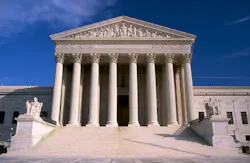
In a decision that clarifies the US Environmental Protection Agency's (EPA) Clean Water Act, the US Supreme Court has ruled in County of Maui v. Hawai'i Wildlife Fund et al. that sewage plants and other industries must obtain a permit under the Clean water act whenever there is the "functional equivalent of a direct discharge" from a point source into navigable waters.
When industries discharge pollutants through a pipe or a ditch into surface waters, a permit from EPA is required. But the central question here was whether a permit is required if the pollutant first passes through soil or groundwater.
The County of Maui's wastewater reclamation facility pumps approximately 4 million gallons of treated water into the ground each day through four wells. A tracer dye study conducted by EPA in 2010 showed a hydrogeologic connection between the wells and the Pacific Ocean half a mile away.
In 2018, the Ninth Circuit Court of Appeals held the County liable under the Clean Water Act because the pollutants were "fairly traceable from the point source to a navigable water such that discharge is the functional equivalent of a discharge into the navigable water." The Supreme Court's ruling today found "fairly traceable" too broad an interpretation, and instead held that a permit is required "when there is a direct discharge from a point source into navigable waters or when there is the functional equivalent of a direct discharge."
While the ruling requires the County to obtain a permit, it was narrower than what environmental groups had hoped for. Still, David Henkin, the Earthjustice attorney who argued the case against the county, believes the ruling is a win. “This decision is a huge victory for clean water. The Supreme Court has rejected the Trump administration’s effort to blow a big hole in the Clean Water Act’s protections for rivers, lakes, and oceans," he said in a press release.