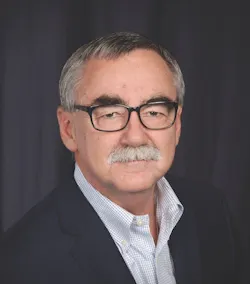
About the author: Kurt Spitzer is executive director of the Florida Stormwater Assn. Spitzer can be reached at [email protected].
Confusion and uncertainty over what water bodies were subject to federal jurisdiction under the Clean Water Act (CWA) has existed for more than a decade. Waterbodies subject to federal jurisdiction under the CWA are termed “Waters of the U.S.” or “WOTUS.” In 2014, the Obama Administration sought to clarify this application. The rules drafted by U.S. EPA and the U.S. Army Corps of Engineers (USACE) attempted to clarify the distinction between the “Scalia test,” focusing on “relatively permanent” waters with a “continuous surface connection” to upstream jurisdictional waterbodies. The final WOTUS rules were adopted in late 2015, generating an outcry.
The WOTUS rules were blocked by federal District and Circuit Courts before they could be implemented, pending determination of their validity. The Trump Administration then quickly announced its intention to revise or repeal the 2015 rule and eventually released a proposal to repeal the Obama-era rule with the intention of proposing a new set of definitions in 2018.
Court Queries
One significant debate was whether the validity of such rules should be determined in a federal District Court or Circuit Court of Appeal. EPA argued that such matters should be heard in Circuit Courts and the challenges to the WOTUS rules themselves consolidated nationwide at the Sixth Circuit Court of Appeals in Ohio. EPA’s position prevailed in the initial stages of the challenge, and the primary challenges to the rule moved to the Sixth Circuit in Ohio.
However, after a three-judge panel of the Sixth Circuit ruled that they had jurisdiction, the decision was appealed to the U.S. Supreme Court, arguing that the District Courts were the proper venue to challenge rules such as WOTUS. On Jan. 22, 2018, the U.S. Supreme Court issued a unanimous decision that federal district courts were the proper jurisdictions for challenges to such rules, thus negating the decisions of the Sixth Circuit Court in Ohio regarding WOTUS. Shortly after, EPA and USACE finalized a rule delaying the applicability date of the 2015 WOTUS rule by two years.
Recommendations
The 2015 WOTUS rule's broad application could result in lesser protection of the nation's waters by local government. Those cities and counties required to implement the provisions of their municipal separate storm sewer system (MS4) permit would find that the conditions of their permit would now be applied to numerous new waters without any new funding, resulting in a diminished ability to target scarce fiscal resources to those waters where there is a realistic chance of seeing improvements in quality.
Any rules proposed in 2018 should recognize the scientifically confirmed connectivity between certain types of waters. A proposed rule should contain measures that ensure environmental protection while improving regulatory clarity and lessening burdens on MS4s. When defining the term “adjacent,” the regulations should limit the term to those waters bordering or contiguous to interstate waters and avoid including terms that further expand the definition. While the 2018 language should include definitions for significant nexus, it should not include functions such as the “retention and attenuation of flood waters” and “runoff storage” when determining relevance for a nexus evaluation. Any proposed regulations for 2018 should confirm that ditches, canals and other waterways that convey storm water to or from features where treatment occurs are included in an exemption, including all sections of the MS4 permit-holder’s system that are upstream from the point of discharge.
Exemptions for waste treatment systems should be clarified to include storm water treatment systems designed to meet CWA requirements or provide flood control functions. and be clarified to include storm water recycling structures. Finally, exemptions for storm water control features constructed to convey, treat or store storm water should not be required to be “created in dry land.”
While the 2014 draft regulations and the 2015 final WOTUS regulations left much to be desired in terms of both adoption process and policy, EPA and USACE should resist calls to limit new regulations to strictly “navigable” waters. The 2018 regulations should be used as tools to improve regulatory clarity, protect water quality and relieve the burden on government bodies.