NOAA launches next-generation forecast system to improve flash flood predictions
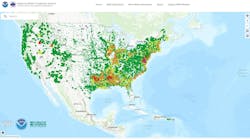
NOAA’s National Weather Service (NWS) has launched a next-generation weather modeling system designed to provide more detailed short-term forecasts and improve predictions of high-impact events, including flash floods.
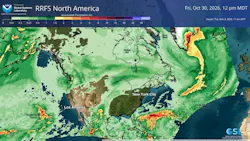
The Rapid Refresh Forecast System (RRFS), implemented Nov. 3, combines capabilities from several existing regional weather models to provide hourly updates across North America. The system uses a 3-kilometer grid to forecast conditions at a local scale and extends forecast lead times for the contiguous United States to 84 hours, compared with 48 hours for the previous High Resolution Rapid Refresh model.
The system also includes the Rapid Refresh Ensemble Forecast System, which generates multiple weather simulations to calculate probabilities of localized events such as flash flooding and severe hail. NOAA said the information will support emergency managers, first responders and broadcasters in preparing for severe weather.
RRFS covers the contiguous United States, Alaska, Hawaii and Puerto Rico, as well as Canada, Mexico, Central America and the Caribbean. Its expanded coverage also provides forecasts for coastal and offshore areas.
NOAA is retiring several legacy regional modeling systems as part of the transition. The agency said the move will streamline its operational forecasting capabilities and support the development of a more unified global-to-local forecast system.