UF-led study highlights farm-level strategies to protect groundwater in Florida’s Santa Fe River Basin
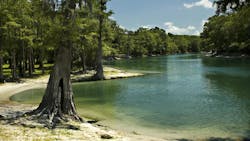
A new University of Florida–facilitated study is shedding light on how agricultural and forestry management decisions in North Florida’s Santa Fe River Basin affect groundwater quality, aquifer recharge and farm profitability. Conducted through the USDA-funded Floridan Aquifer Collaborative Engagement for Sustainability (FACETS) project, the research used a participatory modeling approach that brought together producers, regulators and environmental groups to evaluate real-world tradeoffs at the farm and forest parcel scale.
The Santa Fe River Basin sits atop the Upper Floridan Aquifer, a critical water supply shared by Florida, Georgia and Alabama that faces increasing pressure from nitrate pollution and over-extraction. Researchers and stakeholders co-developed environmental and economic models to assess how different land-management practices—across row crops, pasture and pine plantations—impact groundwater quantity and quality while remaining economically viable.
The findings, published in the Journal of Environmental Management, identified several “win-win” practices that can reduce nitrate losses and increase aquifer recharge without undermining farm and forestry operations. However, the study also found that benefits vary by production system and that some practices may require additional financial incentives to be widely adopted.
“Meeting river flow and water quality targets for the region remains a substantial challenge, but working with stakeholders helped clarify where changes in management practices can make a real difference — and highlighted where additional economic incentives will be essential to support adoption,” said David Kaplan, Ph.D., professor in UF’s Engineering School of Sustainable Infrastructure and the Environment and lead author of the study, in a news release.
Researchers emphasized that integrating producer experience with hydrology, economics and crop science was key to developing actionable insights. “The power of this work came from weaving together different areas of expertise — crop science, hydrology, economics, along with the lived experience from producers,” said Wendy Graham, Ph.D., professor in UF’s Agricultural and Biological Engineering Department and principal investigator on the project.
While focused on North Florida, the study offers a transferable framework for other groundwater-dependent agricultural regions seeking to balance water quality goals with productive working lands.