7 benefits of smart drainage systems in coastal areas
Key Highlights
- Smart drainage systems use sensors to provide real-time data on pressure, conductivity, and moisture, enabling accurate flood risk predictions and timely interventions.
- Engineers must select corrosion-resistant materials like 347 stainless steel to ensure long-term durability of infrastructure components exposed to saltwater and sea spray.
- Automated logging and centralized dashboards improve environmental reporting and facilitate rapid response to flood events or infrastructure failures.
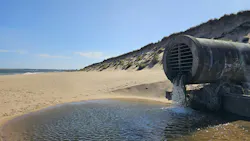
For many, the coast is paradise. The soothing crash of waves, slightly salty air and waterfront view stretching past the horizon are unique to seaside living. They don’t realize that the very elements making this environment special can erode the infrastructure right beneath their feet. Saltwater backflow and sea spray render water unusable and weaken urban infrastructure.
Coastal flooding and heavy rainfall can overwhelm inadequate drainage systems, contaminating surface water and flooding low-lying areas. Since high salinity corrodes pipes, even meticulously designed systems can fail. Rather than wasting time, money and resources repeatedly trying to fix this issue, professionals should look to smart drainage systems.
A smart drainage system is now a necessity, not a luxury or market trend. As sea levels and land subsidence rise, stormwater management strategies must evolve quickly. Traditional static systems are no longer sufficient to handle the dynamic, evolving challenges of coastal environments.
 dreamstime_xxl_239269111
1. Sensor information informs stormwater management
There’s no denying that conventional flood defenses reduce flood risks. However, they can lead to greater vulnerability overall when they fail, and they are prone to failure. High salinity and rising water levels worsen infrastructure corrosion and overload drainage systems. That’s why flood risk management is shifting toward an adaptable, data-driven approach.
Internet-connected sensors send pressure, conductivity, temperature and moisture data to a central cloud system in real time. Professionals can feed this information into stormwater management models, enabling them to run accurate, lifelike simulations.
The more data they have, the more accurate the predictions will become. By outfitting flood and drainage systems with smart technology, utilities professionals can make their digital systems deliver increasingly relevant insights. With new-and-improved stormwater management models, they can enhance infrastructure development strategies.
2. Engineers can use data to strengthen infrastructure
The benefits of smart drainage systems extend to the components and materials used to build stormwater infrastructure. Even with the world's most advanced technology, a smart system is only as good as its physical components, notably pumps, seals and fasteners. Sea spray and brackish air accelerate corrosion, rapidly degrading these critical components.
For smart systems to be a reliable long-term solution, they must be carefully designed to withstand coastal conditions. Sensors allow engineers to identify weak links, while digital twins enhance real-time monitoring. Professionals can use these insights to future-proof designs.
Material selection is just as important as structural engineering. Specialized alloys ensure long-term integrity, helping utilities secure a positive return on investment on smart drainage systems. Experts recommend 347 stainless steel for equipment that comes into contact with saltwater. It offers corrosion resistance and is suitable for temperatures up to 800° Fahrenheit.
3. Smart systems protect sensitive coastal environments
Each year, humans dump trillions of gallons of untreated sewage and stormwater into oceans and rivers, which poses health and environmental hazards. Inundated by chemicals, excess nutrients and pathogens, coral reefs become diseased and die off. They are typically among the most biodiverse ecosystems, but reef-reliant marine life can’t sustain itself in these conditions.
Even when coastal flooding is not imminent, adequate drainage systems are essential for protecting sensitive coastal environments. When sensors detect pollutant concentrations from first-flush events, they can trigger automatic interventions to divert polluted water to treatment facilities or retention ponds, away from sensitive coastal environments.
4. Data collection measures enhance disaster resilience
Although flood risk management is critical in coastal areas, many systems are inadequate. Researchers from the UH Mānoa School of Ocean and Earth Science and Technology used conductivity, pressure and temperature sensors to feed real-world data into a model of the Waikīkī drainage system. They found that the drainage infrastructure will fail sooner than expected.
Accounting for sea-level rise and precipitation, the model showed 100% of the outfalls will fail by 2050. By 2040, 85% of the drainage system will be full. Without sensor data, the researchers wouldn’t have been able to make accurate predictions. Smart technology supports flood management, enhancing disaster resilience.
5. Centralized dashboards enable rapid intervention
A clipboard could hold the most important data in the world, but it’s rendered useless if no one is around to review it. Even conventional digital systems create obstacles to access because they are often accessible only from certain devices, accounts or locations.
A centralized dashboard eliminates geographical boundaries, allowing stormwater professionals to share data freely. Internet-connected sensors send readings to a central cloud server where a machine learning model is on standby to process, analyze and categorize information. Professionals can use an app or a web-based dashboard to access the output at any time.
The main benefit of uninterrupted access is rapid intervention. If something goes wrong, the system can send a push notification to the right people. Preset thresholds determine the severity of such incidents, ensuring that professionals aren’t inundated by irrelevant alerts.
6. Automated logging elevates environmental reporting
People tend to make mistakes. It happens so often that it has received its own name — human error. Professionals may install equipment improperly, forget to log important data or put off maintenance for one week too many.
Digital systems are immune to human error. While they are not infallible, they can monitor events more reliably than humans. Accurate recordkeeping supports every stage of development and operation, from engineering to environmental reporting. Utilities companies can rely on automated logging to enhance monitoring and regulatory compliance.
7. Data-driven predictive maintenance reduces downtime
While coastal environments cover just 4% of the planet’s land area, they are home to almost 30% of the world’s population. In these densely populated areas, the resilience of urban infrastructure is a matter of human health, safety and preservation of the rare natural ecosystems found along the coasts.
While professionals can overengineer components until the sea cows come home, everything fails eventually, putting people and nature at risk. An overlooked benefit of a smart drainage system is its ability to support predictive maintenance strategies.
If utility companies can predict when blockages, cracks or corrosion will occur, they can prevent them from ever happening. Of course, monitoring at this scale is tedious. Professionals cannot spend most of their day checking each screw, seal and fastener. Fortunately, artificial intelligence can streamline analysis, regardless of dataset size.
 dreamstime_xxl_37171941
 dreamstime_xxl_33733491
Smart drainage systems benefit everyone they touch
Sea spray corrodes pipes, and saltwater backflow renders water unusable. Coastal cities need a proactive, data-driven solution to optimize operations, enhance infrastructure resilience and improve water quality. Smart sensors can track structural integrity and water quality in real time, while digital twins and advanced algorithms support monitoring and operations.
Only with accurate, real-time information can professionals strategically mitigate urban flood risks and stormwater runoff issues. With data generated by smart drainage systems, they can build stronger, more climate-resilient systems. This technology may lead to future improvements in material composition, structural engineering and infrastructure development.
About the Author
Emily Newton
Editor -in-chief
Emily Newton is editor-in-chief of Revolutionized. Newton can be reached at [email protected].