The word “resilience” has come up a lot this year. We are being called to be resilient in the face of a global pandemic—the likes of which have not been seen for a hundred years—as individuals, as a country, in our workplaces, and in our personal lives. In the aftermath of natural disasters, like this year's record-breaking wildfires in California or intense hurricane season in the Atlantic, communities have been joining together, calling for unity, resilience, and strength.
To those in the stormwater and erosion control industry, resilience is a familiar term. Resilient infrastructure has become a gold standard for much of the industry, particularly in response to increased flooding, more intense storms, and longer fire seasons.
For many people grappling with the challenges of 2020, it’s tempting to think of resilience as just holding out until things go back to normal. But as we head into the eighth month of the COVID-19 pandemic, we’re realizing more and more that things won’t go back to normal, at least not the normal we knew before. That’s equally true for communities impacted by fires, floods, and hurricanes. Rebuilding often means changing, and hopefully for the better—this time with improved wildfire management practices, more appropriate flood infrastructure, and increased protections for spongy wetlands.
Resilience is more than just bouncing back to the way we were; it’s shifting in the face of change, finding new ways to do things when the circumstances require but not letting go of what’s important or what our goals are. Can we adapt to a new way of doing business? Can we find new ways to support our communities? Can we adjust our skills to better fit an increasingly online world? Can this infrastructure take a beating? Can it handle a variety of scenarios and will it stand the test of time?
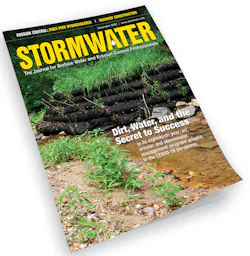
In this issue of Stormwater, we’ve brought you stories of resilience—coming back after a disaster, adjusting to the times, and finding better ways to achieve your goals. In “The Muddy 98,” after construction on US Route 98 stalled in the face of regulatory investigations, the Alabama Department of Transportation developed a new approach to managing stormwater construction projects. ALDOT’s Five Pillars of Construction Stormwater Management now serve as a touchstone during development and construction and support project-wide communication efforts.
The COVID-19 pandemic has affected nearly every aspect of our lives but one of the biggest changes is to group gatherings. How do you adjust to physical distance requirements if your job is built on people getting together? John Chapman and Rebecca Forman of the University of Minnesota’s Erosion and Stormwater Management Program had to quickly pivot to entirely online classes. For more on making the switch and the 18-year history of the Program, check out “Certifying Success.”
After a wildfire in California, the race is on to stabilize the soil before rain arrives to wash away loose sediment and ash and cause devastating mudslides. In “Resilience in the Face of the Fire,” we look at how a neighborhood in Santa Rosa that was destroyed by the 2018 Tubbs Fire was quickly stabilized to prevent washout in the winter and so reconstruction could begin.
Finally, check out this month’s Q&A with Seven Generations Architecture + Engineering. Steve VandenBussche, vice president of practice and senior healthcare architect, discusses what it means to be a Tribally-owned business, how being owned by the Pokagon Band of Potawatomi Indians affects their approach to environmental design and stormwater infrastructure, and how building relationships with local Native American tribes could offer opportunities to other companies.
One of my grandmother’s favorite sayings was “the only constant is change.” That change is rarely expected and it’s easy to be caught unawares. The best way to weather challenging and changing times is to take a cue from the infrastructure that surface water professionals build—prepare as best you can, be flexible when needed, and never take your eye off the goal.
About the Author
Rachel Sim
Editor
As the editor of Stormwater magazine from June 2019 to December 2020, Rachel Sim created and curated quality content addressing the challenges faced by surface water and erosion control professionals, focusing on cutting-edge technology and the latest environmental research.
Related
 Dreamstime Xl 165210790
 Sw2007 Cover