New Storm Water Program Could Protect Water Resources in Reading, Mass.
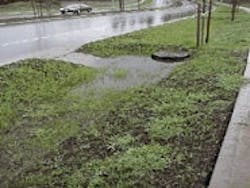
A new program for protecting storm water runoff from pollution could put Reading, Mass., ahead of surrounding towns, if the measure is approved by voters.
According to an article in the Reading Advocate, a storm water mitigation enterprise fund would protect water resources from polluted runoff, which is one of the largest remaining sources of pollution to waterways. Without proper control, these pollutants pass directly into lakes and streams.
In 2003, the town applied for a general permit for storm water control from the EPA, which requires that six control measures must be achieved by 2008. The six measures are public education, public involvement, illicit discharge detection, construction site water runoff control, post-construction runoff control and pollution prevention for municipal operations. In 2004, the committee identified several options for funding the program, one being a new enterprise fund.
The committee outlined the total cost of the program, including operating costs, capital costs, and expenses, and how costs would be assessed to property owners.
The total estimated cost amounted to $540,350 per year, which breaks down to $202,750 for operating costs, $285,000 for capital costs, and $52,600 for expenses. The estimated cost per dwelling unit would be approximately $61 per year.
The committee determined the amounts by looking at impervious surfaces on lots and estimating how much runoff the sites produce. Single and two-family homes would be charged a flat rate, while multi-family properties and industrial and commercial properties would be charged based on the total impervious area of the lot. The committee also suggested an abatement to encourage property owners to minimize the amount of pollutants entering water sources.
To take effect, the mitigation fund must be approved by voters at a town meeting. Committee members have been urging city officials to place the article on the warrant for Nov. 14, even if it is only for discussion.
In the meantime, committee members are urging residents not to pour oil down the drain, but instead dispose of it by taking it to the Department of Public Works garage for recycling. Committee members also requested that dog waste not be thrown down storm drains.
Source: Reading Advocate