U.S. Watersheds Require $202.5 Billion Over 20 Years
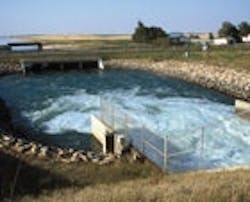
In order to control wastewater pollution for up to the next 20 years, the nationwide capital investment will need to total $202.5 billion, according to a new U.S. Environmental Protection Agency (EPA) report.
The 2004 Clean Watersheds Needs Survey, the agency's fourteenth national survey on the needs of publicly owned wastewater treatment works, have now been delivered to Congress. The EPA conducts such a survey every four years.
The 2004 estimate calls for $134.4 billion for wastewater treatment and collection systems, $54.8 billion for combined sewer overflow corrections and $9 billion for storm water management.
"Water infrastructure is a lifeline for health and prosperity in communities across America," said Benjamin Grumbles, EPA's assistant administrator for water. "EPA is working with our partners to promote sustainable solutions and help utilities and households save money, water and energy."
The 2004 survey called for 8.6 percent more money, or $16.1 billion, than the 2000 survey. An increase in national water needs to due population growth, more protective standards and aging infrastructure have added to the increase, according to Grumbles.
New York and California topped the wastewater treatment works needs list, each requiring more than $20 billion. Florida, Illinois and Ohio follow, having needs in excess of $10 billion. More than 76 percent of the total needs reported are concentrated in 18 states.
The $9 billion storm water management figure includes capital costs for developing and implementing municipal programs aimed at meeting National Pollutant Discharge Elimination System Phase I and II and municipal separate storm sewer system regulations. The needs typically do not consider storm sewer installation or rehabilitation projects.
Texas, Florida, Arizona and Minnesota possess the largest storm water management program needs ($0.9 billion each). Only 28 states and the District of Columbia submitted storm water management program needs data.
The EPA is collaborating with states, tribes, utilities and other partners to reduce infrastructure demand through improved asset management, technologies, water efficiency and watershed-based decision making.
Source: Environment News Service