How Georgia communities are integrating MS4 compliance into stormwater management
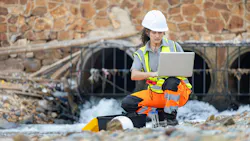
An MS4, short for Municipal Separate Storm Sewer System, is what a community uses to collect and convey stormwater to protect watersheds from flooding and pollution. The program behind it started as a regulatory answer to stormwater pollution. A community needed a permit, so it built a program to satisfy the permit and now, two decades later, the work looks different. In fast-growing Georgia communities, MS4 now sits at the center of water quality, flood mitigation, infrastructure renewal and resiliency, development review, public safety, and long-term watershed health.
Growth changes the job
Consider the ways growth affects our cities and counties. More rooftops and paved areas generally equate to more runoff. More redevelopment means more pressure on conveyance systems that were sized decades ago. Aging pipes fail fast, and the damage is physical. On a recent project, a drainage pipe near occupied historical buildings began failing due to sinkhole formations, threatening foundations and the people inside. Situations like that are why our team treats compliance as a field problem, not a paperwork problem. A stamped design does not make a program compliant. Field conditions do: the site, the budget, and the crews who maintain the system for years after construction closes out.
Georgia's regulatory environment reflects that complexity. The EPDs latest issued permits mean that communities are adapting to evolving expectations across all permit Minimum Control Measures (MCMs). Each MCM must connect back to something a maintenance crew can execute. A program that reads well on paper and stalls in the field is a liability.
Compliance hiding in plain sight
Watershed improvement and stormwater conveyance are two sides of the same work, and MS4 lives within the conveyance side. A stormwater system today does more than move water away quickly. It protects receiving water, reduces erosion, manages sediment, mitigates localized flooding, and safeguards downstream assets. For a county managing well over a hundred miles of storm pipe, that means asset management, inspection, condition assessment, prioritization, and rehabilitation are the program, not a footnote to it.
Here is what some communities underestimate: MS4 requirements surface inside projects that carry no stormwater label. It’s triggered across water and wastewater plant expansions, transportation projects, and facilities work. Aviation infrastructure projects trigger MS4 requirements too, and they carry an added layer of complexity. Hydrocarbons show up as a pollutant of concern, and controlling them often calls for underground proprietary treatment devices alongside the usual stormwater control measures. Those projects still have to meet water quantity requirements like any other. The requirement does not care what the project is called. It shows up in design, permitting, construction, operations, and maintenance regardless.
While the foundation stays the same across all the work, the numbers do not. One permit sets a water quality standard at one inch of rain, the next at half an inch. One calls for a 25-year storm where another takes a 10-year period. Same fundamentals, different flavors, and the variance is buried in the permit language. You have to read to know it, and interpreting it correctly is where good stormwater management support earns its keep.
Integration is the next phase
Strong MS4 support starts with the permit. It means interpreting the permit and the agency's expectations correctly, then translating them into design standards, maintenance practices, and inspection workflows that hold up on-site. It means matching stormwater control measures to site constraints, pollutant sources, maintenance realities, and watershed goals. It means planning inspection, documentation, and reporting from the start, and coordinating across departments that do not always speak the same language. Done well, it moves a community from reactive repair toward proactive stormwater management.
More stringent regulation is coming, but integration is the differentiator. A community that runs compliance, asset management, infrastructure planning, watershed improvement, training, and project delivery as one connected system can achieve resilient growth and still protect the streams and other communities downstream.
About the Author
Tshiams Katala
Tshiams Katala, PE, CFM, CDPESC, MS4CECI, Drainage Leader at Garver