The top stormwater articles of 2025
From regulatory updates and funding announcements to practical guidance on green infrastructure and runoff management, 2025 was a busy year for the stormwater industry. Stormwater Solutions readers turned to in-depth explainers, timely news, and real-world project coverage to stay informed on the challenges and innovations shaping water management. The articles below represent the most-read Stormwater Solutions stories of 2025, highlighting the topics, trends, and solutions that mattered most to stormwater professionals throughout the year.
1. Five facts you should know about the California fires
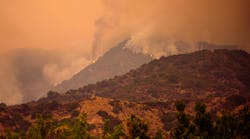
Wildfires around Los Angeles, California, began on January 7, 2025, with the Palisades fire. According to a California government website, the Palisades fire has been 19% contained and has covered 23,713 acres as of January 13, 2025. Strong winds fueled the spread of the fires and made them difficult to fight initially.
2. The Supreme Court has ruled that two common NPDES permit provisions are invalid: So what's next?

Stormwater managers may welcome the guiding principle of the U.S. Supreme Court's recent decision in City and County of San Francisco v. Environmental Protection Agency: permit holders and applicants should not be responsible for water quality impacts that are beyond their control. The court left much of the framework for regulating stormwater discharges under the Clean Water Act, including standard monitoring and best management practices requirements in place. But importantly, the court ruled that NPDES permits that impose "end-result" requirements, which can impose liability under the Clean Water Act whenever the receiving waters for the discharge exceed water quality standards, exceed EPA's authority under the Clean Water Act.
3. Largest Florida bridge build solves stormwater drainage concerns
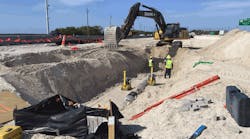
The new Howard Frankland Bridge in Tampa is the largest in Florida with more than 2.6 million square feet of bridge deck area and cost $875 million. Designing and building the stormwater drainage system for that bridge in Tampa, Florida’s largest, had to take care of 3 miles of causeway leading up to and away from the Howard Frankland Bridge, while also considering possible destructive erosion and mitigating hydroplaning. The project was successfully completed with the drainage system named Project of the Year by the Plastics Pipe Institute, Inc. (PPI), the major North American trade association representing the plastic pipe industry.
4. How are AI and GIS revolutionizing stormwater management?

Artificial intelligence (AI) and geographic information systems (GIS) are rapidly changing the workflows of stormwater professionals. Their capabilities range from enhancing sediment control methods to detecting defects in infrastructure. This utility is unprecedented, making the industry’s future equipped to handle the complexities of future water management.
5. Revitalizing a community green space: A case study in innovative erosion protection
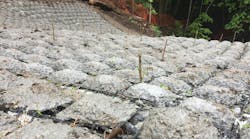
In 2015, significant erosion issues in a residential park in Toronto, Ontario, were first documented by the Toronto and Region Conservation Authority (TRCA) through its Erosion Hazard Monitoring Program. The park, located within the Etobicoke Creek watershed and covering an area of approximately 215,000 square feet (20,000 sqm), features a grassed swale intended to convey stormwater runoff along the length of the park. At the end of the swale, the runoff was funneled beneath a pedestrian footpath via an 18- inch (450 mm) diameter culvert and discharged at the top of the slope. Over time, erosion at various sections of the slope had developed, including outflanking of a mid-slope catch basin and gully formation, some as deep as 3 meters, further downslope. The progression of the gully crest posed a direct risk to adjacent residential backyard boundaries.
6. Revolutionizing green infrastructure: Digital tools for planning, design insights and transformative applications

The impact of urbanization on watersheds is typically evaluated by examining changes in stormwater quantity and quality. Historically, stormwater management relied on the “design storm” approach, leading to the construction of thousands of stormwater control measures (SCMs), such as detention and retention ponds. These SCMs were implemented at both site-specific and watershed scales (e.g., regional ponds) to reduce flood risks and, in some cases, enhance water quality. Early stormwater management practices prioritized the efficient collection, conveyance, and discharge of runoff (Prince George’s County, MD, 1999). However, this approach faced regulatory constraints that limited the development of regional ponds. Furthermore, SCMs implemented at a site-scale without master plans were not always successful in improving water quality or reducing flood risks. Additionally, implementation challenges sometimes resulted in the degradation of streams located downstream of these SCMs.
7. Mitigating future floods: Lessons from Central Texas

The 2025 floods in central Texas highlight a growing trend: The U.S. experienced four 1-in-1000-year storms in one week. Severe weather led to the rising of the Guadalupe River in Texas while heavy rains hit Illinois, New Mexico and North Carolina.
8. Four immediate steps municipalities can take to prevent major flooding
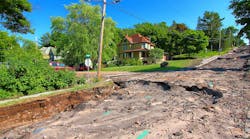
Flooding is the most common natural disaster in the United States. in Michigan, its impact has been felt more acutely in recent years. Detroit’s 2014 500-year-flood event caused $1.8 billion in damages, followed by significant floods in 2016, 2019, and 2020. In 2021, storms brought 6 to 8 inches of rain over two days, resulting in 67,000 Federal Emergency Management Agency claims. Over the next 30 years, 21% of properties in Detroit—nearly 80,000 structures—are at risk of flooding.
9. 2025 Association Forecasts: Where three stormwater associations see the industry heading

From a change in presidential administration to funding and new technology, 2025 is sure to bring change to the stormwater industry. Below, leaders from various associations share what they see coming down the pipeline for the stormwater industry.
10. Water industry reacts to ASCE's 2025 Infrastructure Report Card

On March 25, the American Society of Civil Engineers (ASCE) released its 2025 Report Card for America’s Infrastructure. Overall, the country earned a “C,” the highest score ever received. Stormwater earned a “D,” which is the same grade it received in 2021.