Q&A: Sharing the Load
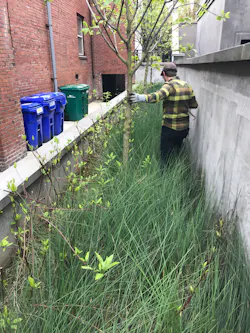
Inspection and maintenance of stormwater assets are key issues for effective stormwater management. A good maintenance and inspection program can keep stormwater infrastructure in service longer, saving money and extending the infrastructure’s lifetime. Jason Schmidt is an environmental specialist with the Bureau of Environmental Services in Portland, OR, and discusses the city’s approach to stormwater infrastructure management, which transfers maintenance responsibility to the property owner.
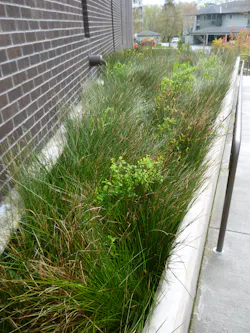
Jason Schmidt: We have a maintenance inspection program, which conducts routine stormwater facility maintenance inspections on privately maintained stormwater facilities. City code requires any development over 500 square feet or significant redevelopment over 500 square feet to install a stormwater management facility. Once they’re installed on to private property, they’re there for the duration of the lifespan of that property—it’s attached to the deed, so on a sale, the responsible party would then transfer to that new owner. We work with the responsible parties and with the ownership to make sure that their stormwater system is not only installed correctly but also being maintained appropriately. The big reason for that is that having private property manage stormwater onsite reduces our overall burden on the public system and we don’t have to build bigger pipes.
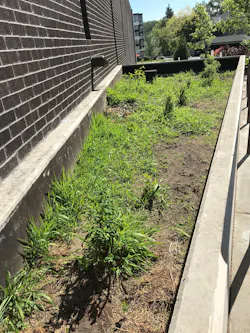
JS: It includes things like eco-roofs, planter boxes, and vegetated systems, but it’s also inclusive of things that are under the ground—vaults, treatment systems. It runs the gamut of a suite of opportunities for stormwater management.
SW: What are some of the maintenance problems or issues that come up?
JS: Currently we’re seeing a lot of issues with landscape maintenance itself. We’re finding that landscape companies are sometimes coming in and just chopping everything down to the ground. That makes it very difficult for some of these plants to rebound and bounce back. We are trying to provide education to the responsible parties that they should direct their landscapers not to over-prune. We find that is a pretty common issue.
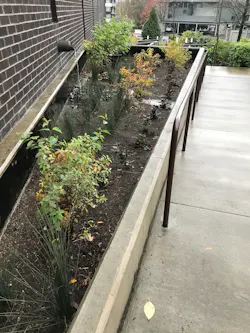
Aside from that, we have problems with erosion and slopes through inlets, basic accumulation of sediment within basins and also within structural systems. We have a list of thresholds of when maintenance is required and those are all outlined under the operation and maintenance plan.

Watch the full interview with Jason Schmidt at www.bit.ly/2tX43X3.